Category: Jobseekers, Employers, Interview
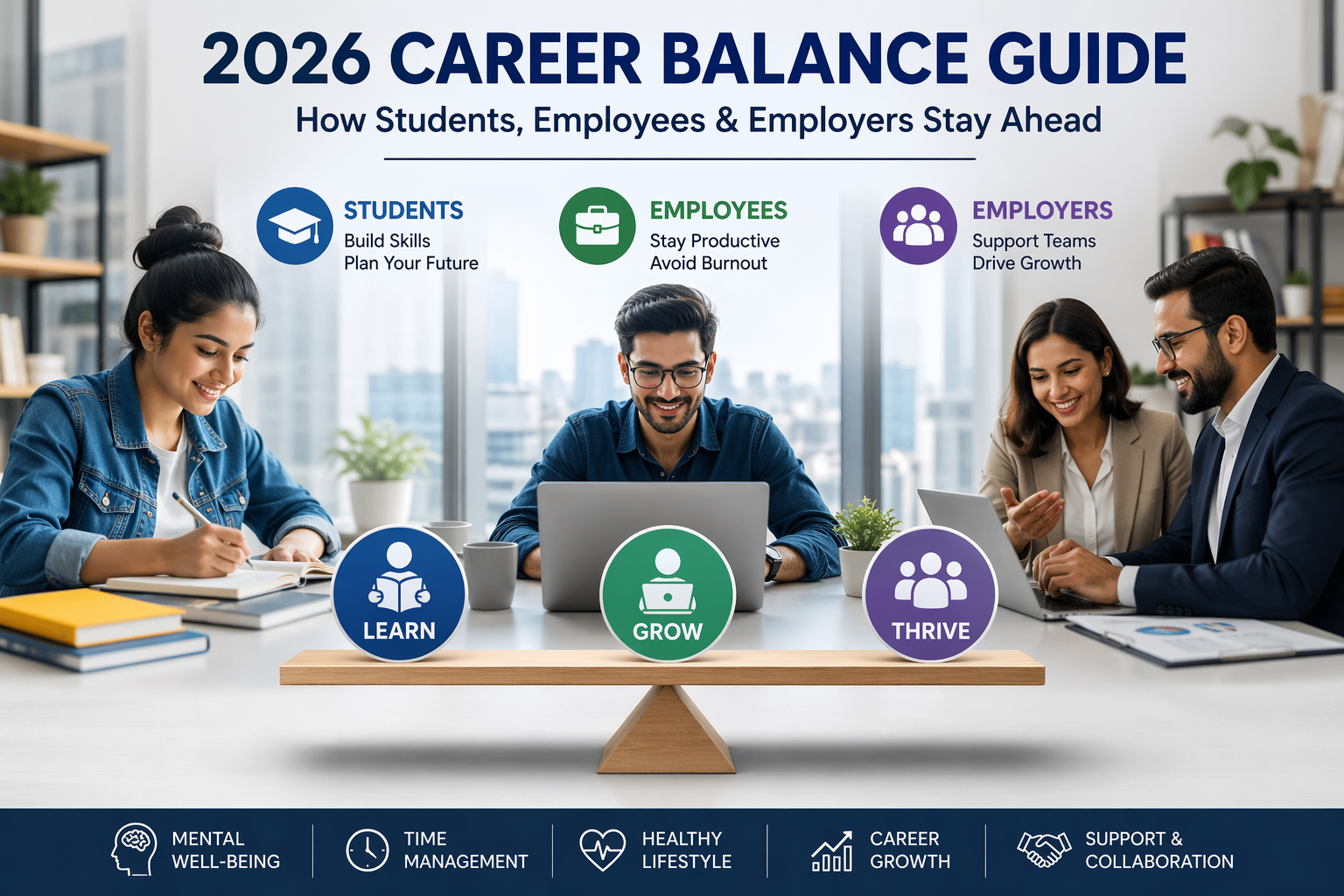
2026 Career Balance Guide: How Students, Employees & Employers Stay Ahead
In 2026, success is no longer defined by long working hours or constant hustle. Instead, the focus has shifted toward career balance — the ability to manage professional growth while maintaining personal well-being.
Whether you are a student preparing for your future, an employee managing workload, or an employer leading a team, achieving the right balance is essential. Without it, burnout, stress, and reduced productivity can quickly take over.
This guide explains how everyone can stay ahead by building a sustainable and smart approach to career and life in 2026.
Why Career Balance Matters More in 2026
Rising Burnout Levels
Modern professionals and students are under constant pressure to perform. Deadlines, competition, and expectations often lead to mental exhaustion. Without balance, productivity drops and motivation declines.
Blurred Boundaries Between Work and Life
With remote work and digital tools, the line between professional and personal time is fading. Many people struggle to disconnect, which impacts their overall well-being.
Increased Competition
Students and job seekers are constantly upgrading skills to stay competitive. While this is important, overworking without rest can reduce long-term performance.
Changing Workplace Expectations
Employers now expect adaptability, faster output, and consistent performance. This makes balance not just important — but necessary for sustainability.
Key Career Balance Strategies for 2026
1. Set Clear Priorities
- Clearly define your most important goals, whether they relate to career growth, education, or personal life improvement.
- Avoid trying to handle multiple major responsibilities at the same time, as it reduces focus and increases stress.
- Break large goals into smaller, manageable tasks so you can track progress and stay motivated.
- Focus your time and energy on activities that provide real value instead of getting distracted by less important tasks.
2. Manage Time Effectively
- Plan your daily schedule in advance to ensure a balance between work, study, and personal activities.
- Use time-blocking techniques to dedicate specific hours for focused tasks, reducing distractions and improving efficiency.
- Prioritize important tasks first instead of delaying them, which helps reduce last-minute pressure.
- Avoid multitasking, as it lowers productivity — focusing on one task at a time delivers better results.
3. Learn to Disconnect
- Take regular short breaks during work or study sessions to refresh your mind and maintain concentration.
- Set clear boundaries for when your work or study time ends, especially in remote or hybrid environments.
- Avoid checking emails or work-related messages during personal time to allow proper mental recovery.
- Spend your free time on activities that help you relax and recharge, such as hobbies or spending time with loved ones.
4. Focus on Skill-Based Growth
- Identify the key skills required in your career field and focus on improving them consistently.
- Choose quality learning over quantity — mastering a few important skills is more valuable than knowing many basic ones.
- Participate in practical experiences such as internships, projects, or real-world tasks to build confidence.
- Keep updating your knowledge regularly to stay competitive in a changing job market.
5. Maintain Physical and Mental Health
- Follow a daily routine that includes proper sleep, healthy eating, and regular physical activity.
- Practice stress management techniques such as meditation, deep breathing, or short walks.
- Avoid working continuously without rest, as it can lead to burnout and long-term health issues.
- Stay socially connected with friends, family, or colleagues to maintain emotional balance.
For Students: Balancing Study, Skills & Life
- Create a realistic study plan that allows you to complete your syllabus without feeling overwhelmed or stressed.
- Focus on understanding concepts instead of memorizing information, which helps in long-term learning.
- Avoid enrolling in too many courses at once, as it can reduce efficiency and increase pressure.
- Take regular breaks during study sessions to maintain focus and avoid mental fatigue.
- Spend time developing practical skills through internships, certifications, or hands-on projects to improve career opportunities.
For Employees: Staying Productive Without Burnout
- Set clear boundaries between your work hours and personal life to avoid continuous stress and exhaustion.
- Communicate openly with your manager if your workload becomes too heavy instead of silently handling pressure.
- Focus on completing tasks efficiently rather than working long hours unnecessarily.
- Take short breaks during the day to maintain energy levels and improve productivity.
- Continuously upgrade your skills to stay relevant and confident in your role.
For Employers: Building a Balanced Workforce
- Provide flexible work options such as remote or hybrid models to help employees manage their time effectively.
- Encourage open communication so employees feel comfortable discussing workload and stress issues.
- Avoid unrealistic deadlines that can negatively impact employee well-being and performance.
- Invest in training and development programs to support employee growth and long-term success.
- Recognize and reward employee contributions regularly to increase motivation and job satisfaction.
Future Trends in Career Balance (2026 and Beyond)
- Hybrid work models will continue to grow, offering more flexibility to employees.
- Companies will increasingly focus on employee well-being as a key part of productivity.
- Skill-based hiring will become more important than traditional qualifications.
- Automation and technology will reduce repetitive tasks, allowing people to focus on meaningful work.
- Work culture will shift from measuring hours worked to evaluating results and outcomes.
Common Mistakes to Avoid
- Ignoring mental and physical health while focusing only on productivity and results.
- Working continuously without taking breaks, leading to fatigue and reduced performance.
- Taking on too many responsibilities at once without proper planning.
- Not setting clear boundaries between professional and personal life.
- Focusing on short-term output instead of building sustainable long-term habits.
Conclusion
Career balance in 2026 is no longer optional — it is essential for long-term success and well-being. Students, employees, and employers must adopt a smarter approach that combines productivity with personal health.
By setting clear priorities, managing time effectively, and focusing on sustainable growth, anyone can stay ahead in today’s competitive world.
True success is not just about achieving more — it’s about maintaining it consistently without burnout.
Sources
- https://www.gallup.com/workplace/349484/state-of-the-global-workplace.aspx
- https://www.worktime.com/blog/statistics/employee-burnout-statistics-trends-in-the-workplace
- https://www.linkedin.com/pulse/four-workplace-well-being-trends-already-shaping-cxrse
- https://meditopia.com/en/forwork/articles/employee-burnout-statistics
- https://www.hibob.com/guides/hr-trends-2026/
#CareerBalance #FutureOfWork #CareerGrowth #ProductivityTips #WorkplaceWellbeing #BurnoutPrevention #StudentLife #ProfessionalGrowth #JobSearch2026 #CareerSuccess #WorkplaceTrends #SkillDevelopment #EmployeeWellbeing #JobReady #CareerTips #SuccessMindset #WorkSmart #LifeBalance #Jobs2026 #CareerPlanning