Category: Jobseekers, Employers, Interview
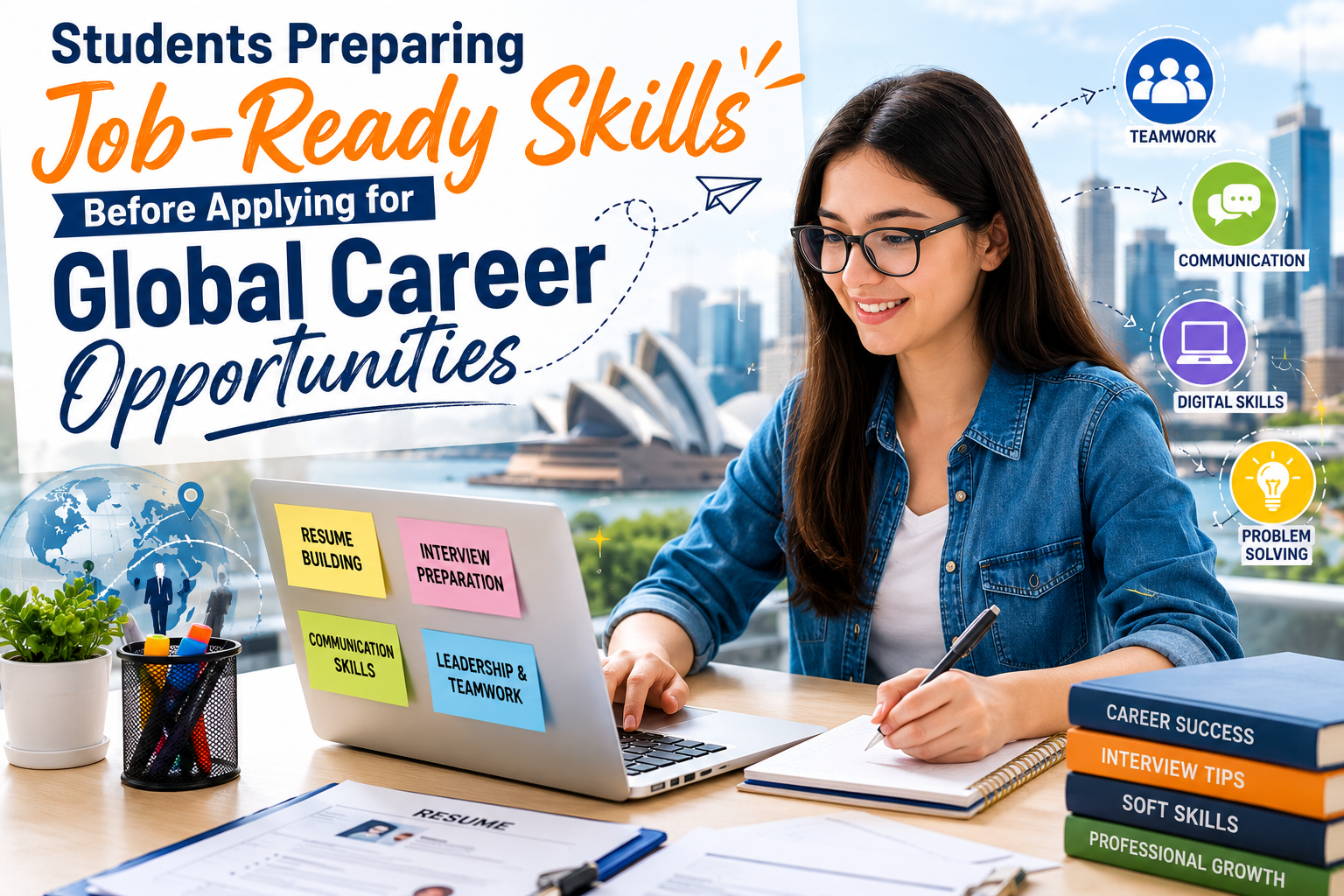
From Campus to Global Careers: Job-Ready Skills Students Need Before Applying
By Isla Bennett | 19 June 2026 | 10:00 AM IST
Every year, thousands of students complete their university studies with strong degrees, good grades and big career goals. Many dream of working with multinational companies, global brands or fast-growing organisations in Australia. But when it comes to getting shortlisted, many students realise one important truth: academic success and career readiness are not the same thing.
A degree can open the door, but job-ready skills help students walk through it with confidence. Employers today are not only looking at qualifications. They also want candidates who can communicate clearly, solve problems, work in diverse teams, use digital tools and adapt to real workplace expectations from day one.
For students looking for graduate jobs in Australia or global career opportunities, building job-ready skills before applying can make a major difference.
Why Career Readiness Matters More Than Ever
The job market is changing quickly. Global companies are using digital hiring systems, remote interviews, online assessments and structured recruitment processes to find the right candidates.
This is where many students struggle. They may have strong academic knowledge, but they may not know how to write a targeted resume, answer interview questions, or show practical experience. This gap can make it harder to get noticed, even when the student is genuinely capable.
Career readiness is not about being perfect. It is about being prepared — knowing how to apply for jobs properly, communicate with recruiters, and prove that you can contribute in a professional workplace.
Understand What Global Employers Actually Want
Multinational companies operating in Australia usually look beyond degrees and grades. They want candidates who can work in fast-paced, multicultural and often technology-driven environments. A student with strong marks may still miss out if they cannot show communication, teamwork and problem-solving ability.
Global employers often value adaptability, clear communication, teamwork, cultural awareness, digital confidence and the ability to work under pressure. These skills matter because modern workplaces are not limited to one office or one type of team — employees often work with colleagues across different backgrounds, locations and time zones.
It is not enough to simply say, "I am a good communicator." Employers want real examples — a group assignment, a part-time job, or a university project where the student handled pressure or supported a team outcome. Before applying anywhere, students should prepare three or four real examples from their study or work experience to use later in resumes and interviews.
Build a Resume That Speaks to Recruiters
A resume is often the first impression a student makes on an employer. Many students still write resumes like a simple list of duties, but a stronger resume focuses on achievements and outcomes.
Instead of writing "Worked on a university project," a student can write "Collaborated with a team of five to complete a market research project and present findings to the class." Instead of "Handled customer service," try "Assisted customers in a fast-paced retail environment while resolving daily service issues."
A good resume should include a short professional summary, education details, relevant skills, project experience, part-time work and certifications — kept simple, clean and easy to read. Students should also tailor their resume for each role rather than sending the same version everywhere. Even small changes can make it look far more relevant to the employer.
Learn How Applicant Tracking Systems Work
Many large companies use Applicant Tracking Systems (ATS) to filter resumes before a recruiter ever sees them. This means resumes need to be simple, clear and keyword-friendly.
An ATS-friendly resume avoids complicated designs, heavy graphics, tables and unusual fonts. It uses standard headings such as Education, Experience and Skills, and naturally includes keywords from the job description — without copying the ad word-for-word. A clear, targeted resume has a much better chance of passing early screening and reaching the recruiter.
Prepare Strong Interview Answers
Getting an interview is only the first step. Many fresh graduates lose confidence because they give short, general or memorised answers.
A better method is the STAR technique: Situation, Task, Action and Result. This helps structure answers around a clear story instead of rambling. Students should prepare for common questions like:
- Tell me about yourself, and why do you want this role
- What are your strengths, and how do you handle pressure
- Tell me about a time you worked in a team, and why should we hire you
The goal isn't to sound perfect — it's to sound prepared and self-aware. Researching the company's work, values and recent news beforehand also helps students answer with more confidence.
Build Digital Confidence Before Applying
Modern hiring is highly digital. Students may apply through online portals, complete video interviews, or respond to recruiter emails. This makes digital confidence part of career readiness.
Students should know how to write professional emails, use LinkedIn properly, and communicate clearly online. A clear subject line, a polite reply, and a well-written LinkedIn summary all create a better impression. Video interview etiquette matters too — checking the internet connection, choosing a quiet background, and joining on time all signal professionalism, even when the interview is online.
Understand Work Rights and Visa Basics
For international students in Australia, work rights and visa conditions are extremely important. Before applying for graduate jobs or part-time roles, students should understand their work-hour entitlements, what the Temporary Graduate visa allows, and whether certain employers are open to international candidates.
Being informed helps students apply for suitable roles, avoid wasting time on ineligible positions, and speak confidently if an employer raises work rights during hiring.
Gain Practical Experience Before Graduation
Employers value practical exposure because it shows a student has applied their knowledge outside the classroom. This doesn't need to be a big internship with a famous company — it can be a short internship, part-time job, volunteering role, freelance task or industry certification.
What matters most is whether the student can explain what they learned. A part-time job can show reliability and time management; a university project can show research and teamwork. Students should start building this experience early, since waiting until graduation only makes the job search harder.
Build a LinkedIn Profile That Supports Your Resume
A LinkedIn profile is no longer optional. Recruiters often check it right after reading a resume, and an incomplete or inconsistent profile can weaken a student's overall impression.
A strong profile should include a clear headline, professional photo, short summary, education, skills and work experience — for example, "Business Graduate | Interested in Marketing, Customer Service and Graduate Roles." The profile should match the resume; if the two tell different stories, recruiters may feel unsure about the candidate.
Learn How to Communicate Like a Professional
Communication is one of the most important job-ready skills. Students should learn to write polite emails, respond to messages on time, and speak professionally during interviews.
This doesn't mean using complicated words — it means being clear, respectful and confident. Instead of "Hey, any update?", a student can write, "Hi, I hope you are well. I just wanted to kindly follow up on my application. Thank you for your time." These small details make a real difference, since employers notice candidates who communicate well.
Focus on Skills That Support Long-Term Career Growth
Students should think beyond their first job toward long-term career growth. Useful skills include communication, teamwork, problem-solving, digital literacy, time management and adaptability, along with tools like Microsoft Excel, CRM systems or industry-specific software depending on the field.
The most important habit is continuous learning. A student who keeps improving their skills will have a stronger chance of growing in a changing job market.
Final Thoughts
Moving from campus to a global career is not only about completing a degree — it's about becoming ready for the workplace. Students who understand employer expectations, build strong resumes, prepare for interviews, gain practical experience and communicate professionally are far more likely to stand out.
A degree may help students become eligible for a role, but job-ready skills help them become employable. That is the real difference between simply applying for jobs and being prepared for a global career.
Sources & References
Jobs and Skills Australia – Occupation Shortage List
https://www.jobsandskills.gov.au/data/occupation-shortage/occupation-shortage-list
Study Australia – Work in Australia
https://www.studyaustralia.gov.au/en/work-in-australia
Australian Government Department of Education – The Rights of International Students at Work
https://www.education.gov.au/international-education/support-international-students/rights-international-students-work
Department of Home Affairs – Temporary Graduate Visa Subclass 485
https://immi.homeaffairs.gov.au/visas/getting-a-visa/visa-listing/temporary-graduate-485
Fair Work Ombudsman – International Students Fact Sheet
https://www.fairwork.gov.au/tools-and-resources/fact-sheets/rights-and-obligations/international-students
LinkedIn News – Skills on the Rise 2026
https://news.linkedin.com/2026/Skills-on-the-rise-2026
PwC – Global AI Jobs Barometer
https://www.pwc.com/gx/en/services/ai/ai-jobs-barometer.html
Your Career – Explore Your Career
https://www.yourcareer.gov.au/
#JobReadySkills #GraduateJobsAustralia #StudentCareers #GlobalCareers #CareerPreparation #ResumeTips #InterviewSkills #InternationalStudents #WorkplaceSkills #CareerReadiness #StudentEmployability #GraduateCareers #JobSearchTips #CareerGrowth #FutureOfWork