Category: Jobseekers, Employers
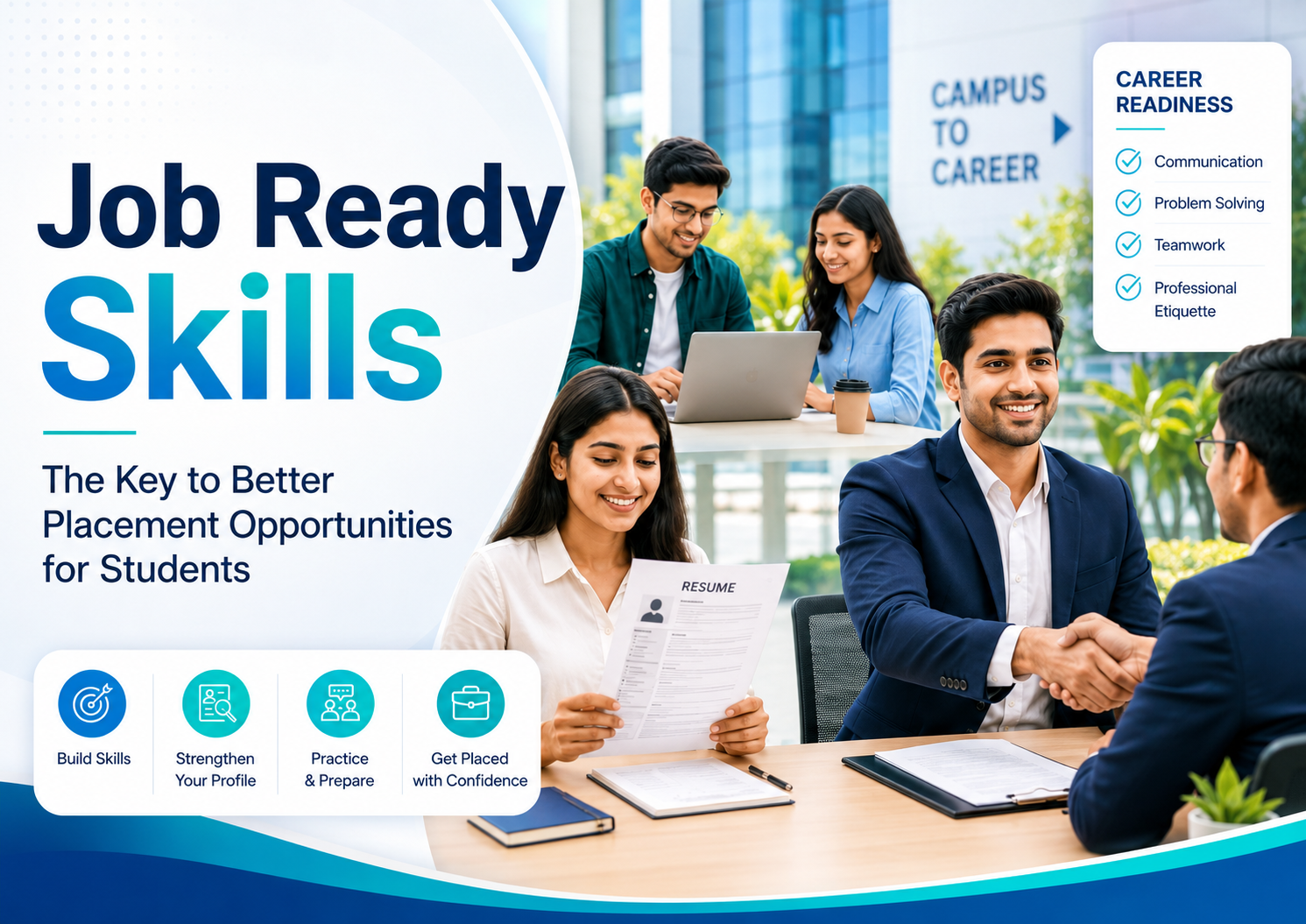
Job Ready Skills: The Key to Better Placement Opportunities for Students
By Sarah Williams | June 23, 2026 | 09:45 PM IST
A degree opens doors, but it rarely walks through them alone. In today's competitive hiring market, employers want graduates who can contribute from day one — not just candidates with good grades. This gap between academic learning and workplace readiness is exactly what job ready skills are designed to close.
For students preparing for placement season, building these skills early can be the difference between getting shortlisted and getting overlooked.
What Are Job Ready Skills?
Job ready skills are the practical abilities that help students perform well once they step into a professional environment. They sit alongside academic knowledge rather than replacing it — a student might understand marketing theory perfectly, but still need communication skills to pitch an idea, teamwork to collaborate with colleagues, and confidence to handle an interview.
These skills generally fall into two categories:
- Technical skills — industry-specific tools, software, and digital know-how
- Soft skills — communication, time management, adaptability, and problem-solving
Together, they shape how employable a student appears to a recruiter.
Why Job Ready Skills Matter During Placements
Most placement drives see dozens of students competing for the same role. Recruiters don't just check qualifications — they look for people who can learn fast, adapt to a new environment, and add value quickly.
Students with strong job ready skills tend to perform better across every stage of the process — resumes, interviews, group discussions, and aptitude tests. They can explain their strengths clearly and demonstrate genuine career intent, both of which improve shortlisting chances significantly.
Communication Skills Shape the First Impression
Communication is often the single biggest factor in how a student is perceived. From self-introductions to interview answers to group discussions, the ability to speak clearly and listen actively matters more than using complex vocabulary.
Recruiters pay close attention to how candidates respond under pressure. A student who communicates with clarity and confidence naturally stands out from the rest of the applicant pool.
A Strong Resume Gets You Shortlisted
Before any interview happens, the resume does the talking. Many students limit their resumes to education details alone — a missed opportunity. A resume that highlights internships, projects, certifications, and measurable achievements gives recruiters a much clearer reason to shortlist a candidate.
Using simple formatting, relevant keywords, and concise language makes resumes easier to scan — something recruiters appreciate when reviewing hundreds of applications.
Interview Preparation Builds Real Confidence
Interviews can be intimidating, especially for first-time job seekers. Many students know the right answers but freeze up when asked to articulate them. Preparing for common questions — "Tell me about yourself," "Why should we hire you?," "What are your strengths and weaknesses?" — helps reduce nervousness and improves overall performance.
Interview readiness also extends beyond verbal answers. It includes professional dressing, body language, and following basic interview etiquette.
Problem-Solving Skills Make You Stand Out
Workplaces are full of unexpected challenges, tight deadlines, and shifting priorities. Employers actively look for candidates who can think logically and respond to problems without panicking.
This skill is frequently tested through aptitude rounds, case studies, and situational interview questions. A student who can break down a problem and explain their reasoning leaves a strong impression, even if their answer isn't perfect.
Teamwork Reflects Workplace Maturity
Almost every job involves working with others — managers, peers, clients, or cross-functional teams. During group discussions and placement activities, recruiters quietly observe how students behave:
- Do they listen?
- Do they respect differing opinions?
- Do they contribute meaningfully?
Strong teamwork signals professional maturity and gives recruiters confidence that a candidate will fit well into a real office environment.
Adaptability Helps Students Grow Faster
New tools, new processes, and new expectations are constants in modern workplaces. Students who adapt quickly — and who are open to feedback — tend to progress faster in their roles.
This mindset also helps freshers manage the transition from structured college life to the more fluid demands of professional work.
Digital Skills Are No Longer Optional
Even non-technical roles today require basic digital fluency — email etiquette, spreadsheet basics, video conferencing tools, and simple research skills. Students who are comfortable with everyday digital tools require less onboarding time, which makes them more attractive to employers from the outset.
Digital competence also strengthens resumes, particularly when paired with role-specific certifications.
Professional Attitude Completes the Picture
Skills alone aren't enough — attitude matters just as much. Punctuality, responsiveness, respectful communication, and genuine interest in the role all shape how recruiters perceive a candidate.
Small, consistent behaviours — a confident introduction, a polite follow-up email, showing up prepared — often leave a lasting impression that technical skills alone can't create.
How Students Can Start Building Job Ready Skills
The best time to start building these skills is well before the final placement drive. Some practical steps include:
- Drafting and refining a strong, achievement-focused resume
- Practising answers to common interview questions
- Joining mock interviews or peer practice sessions
- Building basic digital and tool proficiency
- Taking on small projects or internships for real-world exposure
- Staying updated on industry expectations and hiring trends
Consistent, early effort compounds — students who start months ahead almost always feel more confident when placement season actually arrives.
How JobReady Placements Can Help
JobReady Placements works with students to bridge exactly this gap between education and employability. From resume building to interview confidence and overall professional readiness, the platform helps students walk into placement opportunities better prepared and more self-assured.
Conclusion
Job ready skills are no longer a "nice to have" — they're essential. Academic knowledge gets a student to the interview room, but communication, teamwork, problem-solving, digital fluency, and professional attitude are what get them the offer.
Students who start building these skills early consistently perform better during placement season — and set themselves up not just to get a job, but to grow in it.
Sources and References
Australian Government DEWR — Employability Skills Training
Use for: workplace skills, communication, teamwork, problem-solving, digital literacy.
National Careers Service — Understand and Develop Your Skills
Use for: soft skills, transferable skills, teamwork, communication, problem-solving.
World Economic Forum — Future of Jobs Report 2025
Use for: future skills, technology skills, creative thinking, resilience, workplace readiness.
U.S. Department of Labor — Soft Skills: The Competitive Edge
Use for: professionalism, work ethic, communication, teamwork, critical thinking.
University of Sydney — Employability Skills
Use for: student employability, teamwork, communication, planning, organising, problem-solving.
Youth Central Victoria — 8 Job Skills You Should Have
Use for: employability skills, job applications, interviews, teamwork and communication.
Your Career Australia — Future Skills Organisation
Use for: employer expectations, practical skills, qualifications, teamwork and problem-solving.
#JobReadySkills #PlacementPreparation #CampusPlacement #StudentCareers #CareerReadiness #EmployabilitySkills #InterviewSkills #ResumeTips #SoftSkills #DigitalSkills #FreshersJobs #CareerGrowth #WorkplaceSkills #GraduateEmployability #JobInterviewPreparation #PlacementSkills #JobReadyPlacements #CareerDevelopment