Category: Jobseekers, Employers, General, Interview
Post-Interview Best Practices: Dos & Don'ts
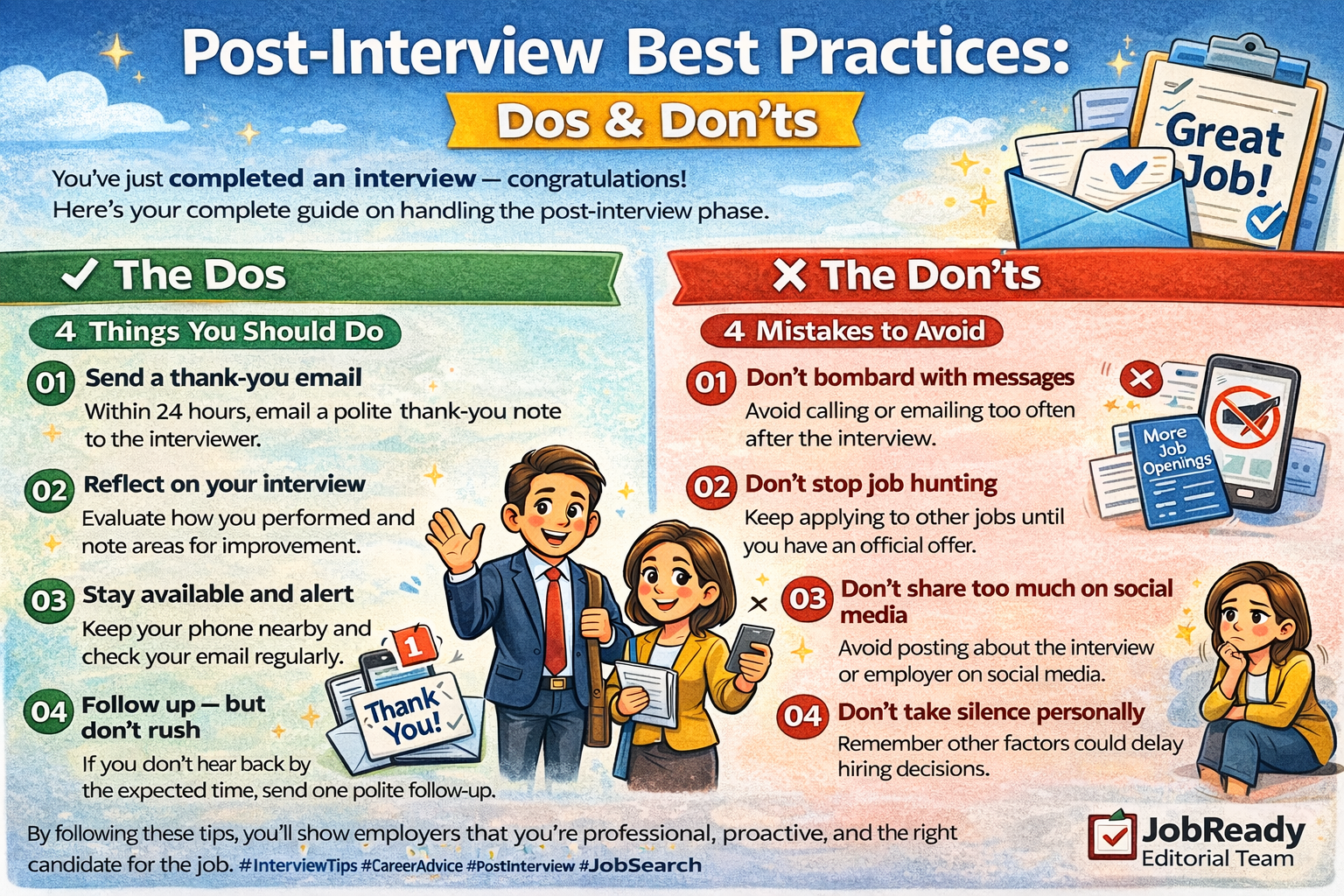
Post-Interview Best Practices:
Dos & Don'ts
You've just completed an interview — congratulations! But your job isn't done yet. What you do after the interview can still influence the employer's final decision. Here's your complete guide to handling the post-interview phase with professionalism and confidence.
✓ The Dos4 Things You Should Do
01
Send a thank-you email
Within 24 hours, email a polite thank-you note to the interviewer. Express appreciation for their time and briefly restate your interest in the role.
Example: "Thank you for the opportunity to discuss the [Job Title] position. I appreciated learning more about [something specific], and I'm excited about the chance to contribute to your team."
02
Reflect on your interview
Take a few minutes to evaluate how the interview went. What did you answer well? What could you improve next time? This self-review helps you grow and prepare better for future interviews.
03
Stay available and alert
Keep your phone nearby and check your email regularly. Employers may follow up with more questions or next steps — and timely responses matter more than you think.
04
Follow up — but don't rush
If the recruiter gave you a timeline (e.g., "We'll contact you in a week"), respect it. If that time passes with no response, one polite follow-up email is perfectly acceptable.
Rule of thumb: One thank-you + one follow-up. That's your limit.
✕ The Don'ts4 Mistakes to Avoid
01
Don't bombard with messages
Avoid calling or emailing too often. One thank-you message and one follow-up after the promised timeline is enough. Anything more can come across as desperate or unprofessional.
02
Don't stop job hunting
Even if the interview went brilliantly, continue applying for other roles. Keep the momentum going until you receive a formal written offer — never pause your search on gut feeling alone.
03
Don't share too much on social media
Avoid posting about the interview or the employer online. It can come across as unprofessional — and hiring managers may see it before they've made their final decision.
04
Don't take silence personally
Sometimes silence isn't about your performance at all. Internal delays, budget changes, or shifting hiring priorities all happen. Stay positive, stay patient, and keep moving forward.
The bottom line
Nailing the interview is only part of the process. Your post-interview actions reflect your professionalism and attitude. By staying polite, prepared, and patient, you show that you're not just a good candidate — you're the right choice.
- Indeed — How to follow up after an interview
https://www.indeed.com/career-advice/interviewing/how-to-follow-up-after-an-interview - LinkedIn — Thank-you email after interview tips
https://www.linkedin.com/pulse/how-write-thank-you-email-after-interview-linkedin - Glassdoor — Post-interview etiquette
https://www.glassdoor.com/blog/guide/post-interview-etiquette/ - Harvard Business Review — Follow-up strategies
https://hbr.org/2016/01/what-to-do-after-a-job-intervie