Category: Jobseekers, Employers, Interview
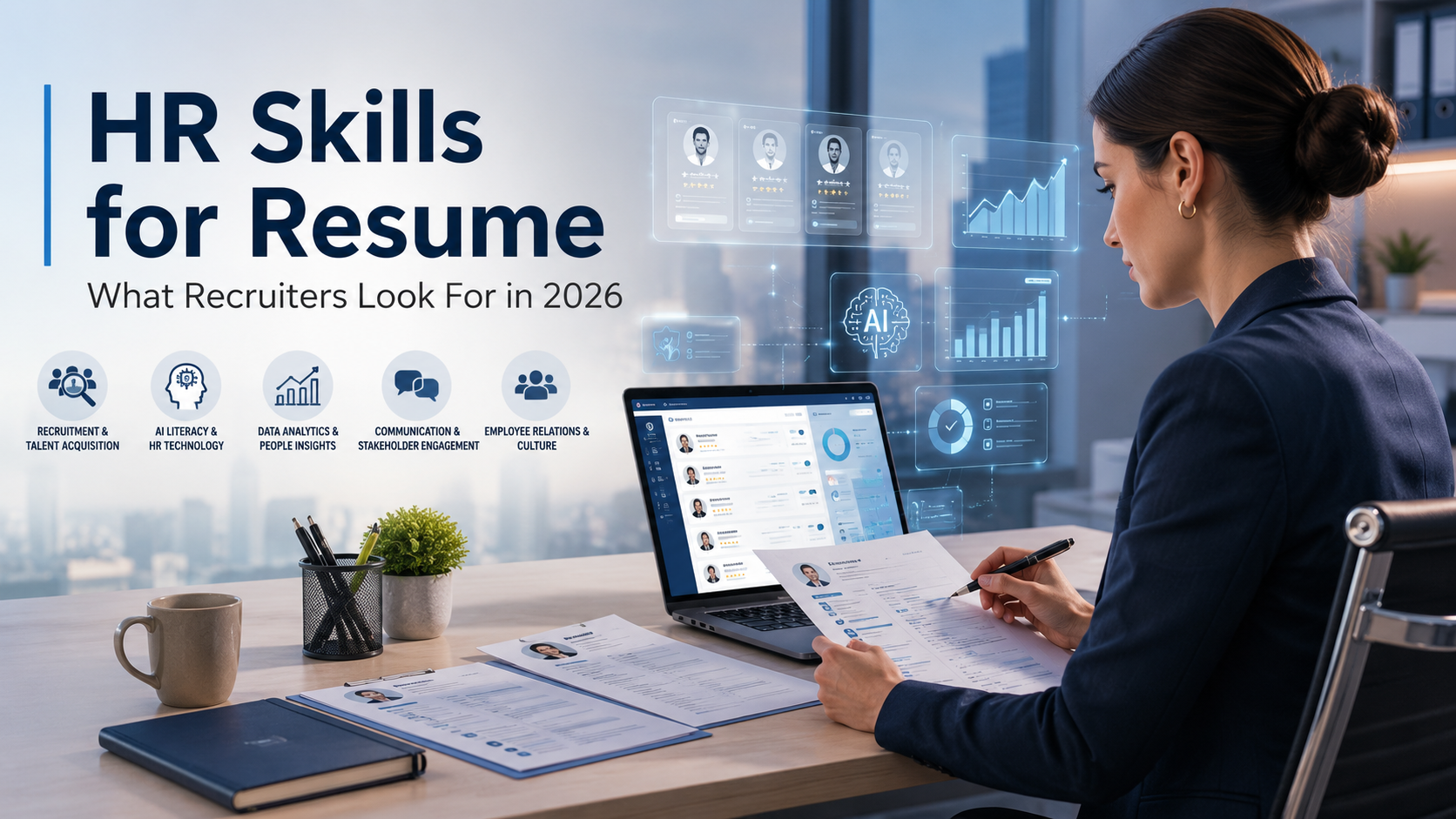
HR Skills for Resume: What Recruiters Look For in 2026
Written by Ava Mitchell | 13 July 2026 | 10:00 AM IST
Human resources has become a broader, technology-driven profession. In 2026, employers expect HR candidates to understand people management, digital systems, workplace policies and employee data. A strong HR resume should show communication, judgement, organisation and practical experience.
Generic phrases such as “good communication skills,” “team player” or “responsible for recruitment” are not enough. Recruiters want to know where a skill was used and what result was achieved. Before updating your application, review these resume writing tips and identify the relevant abilities.
Why HR Skills Matter on a Resume
An HR resume should show that a candidate can support employees while protecting the organisation’s systems, information and workplace standards. Entry-level roles may involve interview scheduling, onboarding, employee records and administration. Experienced positions may require employee relations, workforce planning and performance management.
If a vacancy repeatedly mentions onboarding, HRIS administration and stakeholder communication, these abilities should appear naturally in your resume when they match your experience. A targeted version is usually more effective.
Recruitment and Talent Acquisition
Recruitment remains one of the most important HR capabilities. Instead of writing “assisted with recruitment,” describe the parts of the process you supported, such as preparing advertisements, screening applications, arranging interviews, checking references and coordinating onboarding.
A stronger statement could be: “Screened more than 100 applications and coordinated interviews for 24 shortlisted candidates across administration and customer service vacancies.” Candidates applying for talent acquisition roles may also mention applicant tracking systems, candidate sourcing and communication with hiring managers.
HR Technology and HRIS Skills
Digital capability is essential in most HR positions. Organisations use Human Resource Information Systems to manage employee records, leave, attendance, onboarding, performance reviews and reporting. Recruiters may look for experience with Workday, Employment Hero, SAP SuccessFactors, Oracle HCM, BambooHR or another platform named in the advertisement.
Microsoft Excel is also useful for recruitment trackers and headcount reports. Instead of writing only “HRIS knowledge,” use a practical example: “Maintained employee records for more than 150 staff members and completed monthly data checks.” Only include software you have genuinely used.
AI Literacy and Responsible Technology Use
Artificial intelligence is influencing recruitment, employee communication and HR administration. HR teams may use AI-supported tools to draft job advertisements, organise candidate information, summarise survey responses or automate repetitive processes. However, human judgement remains essential when decisions affect people.
A credible statement would be: “Used approved AI tools to prepare first drafts of recruitment communication and reviewed all content for accuracy, privacy and inclusive language.” The article on AI and skills-based hiring also explains why employers are paying more attention to genuine skills and practical evidence.
Employee Relations and Workplace Compliance
Employee relations requires communication, confidentiality and sound judgement. HR professionals may respond to staff enquiries, document concerns and support managers during difficult conversations. Recruiters want evidence that a candidate can remain professional and follow the correct escalation process.
Instead of listing “conflict resolution,” write: “Responded to employee concerns, prepared accurate case notes and supported managers in following internal grievance procedures.” Australian HR candidates should also show an appropriate understanding of workplace policies and employee records.
Communication and Stakeholder Management
Communication is essential because HR connects candidates, employees, managers and external providers. Strong communication includes writing clear emails, explaining workplace processes, listening carefully and adapting information for different audiences.
A useful statement is: “Delivered onboarding sessions for new employees and explained workplace policies, leave procedures and internal support channels.” Stakeholder management can be shown through: “Worked with five department managers to confirm staffing requirements and coordinate recruitment timelines.”
HR Analytics and Reporting
HR teams use workforce data to understand recruitment performance, employee turnover, absenteeism, training completion and engagement. Entry-level professionals may update spreadsheets, while experienced candidates may analyse patterns and recommend actions.
A strong statement could be: “Prepared monthly recruitment and employee turnover reports using Excel, helping managers identify recurring vacancies and staffing priorities.” When mentioning analytics, explain the type of information handled and how it supported a decision.
Performance Management and Employee Development
Performance management may include coordinating review cycles, supporting goal-setting and helping managers address concerns. Candidates can also mention induction programs, training coordination and development plans.
A suitable example is: “Coordinated the annual performance review process for 80 employees and followed up with managers to improve completion rates.” The guide to job-ready skills also explains how communication, digital confidence and professional behaviour can strengthen employability.
Change Management and Confidentiality
Businesses regularly introduce new systems and policies. HR professionals often communicate these changes and support employees during implementation. A useful statement could be: “Supported the introduction of a new employee self-service system by preparing user instructions, answering staff questions and tracking implementation issues.”
Confidentiality is equally important because HR teams handle salary information, workplace complaints and personal records. Show how you applied it: “Maintained confidential employee files and followed access controls when processing employment, leave and performance documentation.”
How to Present HR Skills
HR skills should appear throughout your resume rather than only in one list. Your professional summary should introduce your experience level, strongest capabilities and target role. Your employment history should then show how those abilities were applied through responsibilities and results.
A suitable summary could be: “HR coordinator with three years of experience supporting recruitment, onboarding, employee records and workplace policy administration. Skilled in HRIS management, stakeholder communication and HR reporting.”
Your skills section may include recruitment, candidate screening, onboarding, HRIS administration, employee relations, reporting, performance management, confidentiality and AI literacy. Select only the skills that match the role and that you can explain confidently.
HR Skills for Students and Fresh Graduates
Students and fresh graduates can demonstrate HR skills through internships, university projects, part-time work, volunteering and student leadership. Recruiting student volunteers may involve advertising opportunities, reviewing applications and coordinating schedules.
Customer service can demonstrate communication and problem-solving, while administrative work can show organisation, record management and confidentiality. The campus placement preparation guide offers more guidance on presenting projects and practical experience.
Common HR Resume Mistakes
A common mistake is listing skills without evidence. Recruiters see phrases such as “strong organisation,” “excellent communication” and “conflict resolution” on many applications, so these claims need examples. Candidates should also avoid copying every keyword from the advertisement, adding software they have never used or sharing confidential information.
Using the same resume for every position can also reduce its effectiveness. A recruitment role may require more emphasis on candidate sourcing, while an employee relations role may focus on workplace policies and manager support.
Final Thoughts
A strong HR resume in 2026 should demonstrate more than an interest in working with people. Recruiters are looking for candidates who can combine recruitment, communication and employee support with technology, workplace knowledge, data awareness and professional judgement.
Before submitting your application, review the job description, identify the most relevant HR skills and support each claim with a clear example. A focused resume helps recruiters understand your value.
Explore more career resources, employment guidance, jobs and internships through JobReady Placements.
Sources and References
Jobs and Skills Australia — Human Resource Professionals
Overview of recruitment, workplace relations, dispute resolution and the responsibilities of HR professionals in Australia.
Jobs and Skills Australia — Human Resource Advisers
Information about staffing, personnel administration and supporting organisational HR policies and programs.
Fair Work Ombudsman — Workplace Privacy Best Practice Guide
Guidance on handling employee information, maintaining workplace privacy and protecting confidential records.
Fair Work Ombudsman — Employee Record-Keeping
Information about maintaining accurate, secure and confidential employee records in Australian workplaces.
World Economic Forum — Future of Jobs Report 2025
Research covering AI skills, technological literacy, analytical thinking, adaptability and changing workforce requirements.
Australian HR Institute — Australian HR Capability Framework
A professional framework outlining the skills, knowledge and behaviours required across modern HR roles.
Australian HR Institute — AI Toolkit for HR
Practical resources covering responsible AI use, people strategy and the impact of technology on human resources.