Category: Jobseekers, Employers, Interview
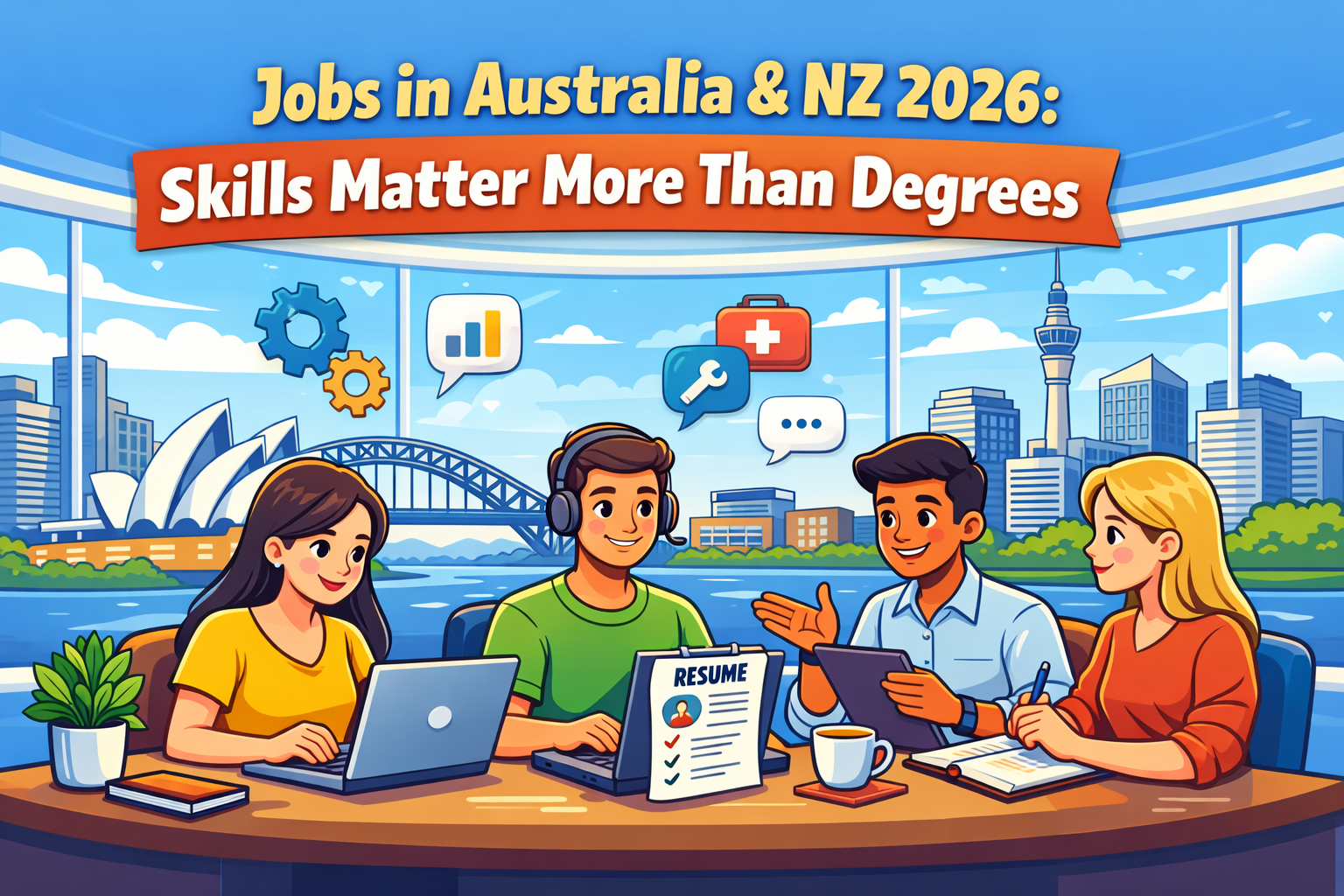
Jobs in Australia & New Zealand for Students and Fresh Graduates in 2026
Australia and New Zealand are among the most attractive destinations for international students and fresh graduates looking to build a career abroad. However, the job market in 2026 has become more competitive, and employers are increasingly focused on practical skills rather than just academic qualifications.
At the same time, both countries are facing skill shortages in several industries, which creates opportunities for job-ready candidates who can contribute from day one.
Current Job Market Trends in Australia & New Zealand (2026)
The hiring landscape in both countries is changing due to:
- Increased automation in entry-level administrative roles
- Higher competition from international graduates
- Employer focus on job-ready and skilled candidates
- Growth in demand for healthcare, IT, and trade professionals
In Australia, industries like healthcare, construction, hospitality, and technology continue to face skill shortages. Similarly, New Zealand is actively hiring in agriculture, healthcare, IT, and engineering sectors.
This means opportunities exist — but only for candidates who are prepared.
Who Has the Most Advantage?
The following groups have the highest chances of getting jobs:
- International students studying in Australia or New Zealand
- Fresh graduates with internship experience
- Candidates with practical, job-ready skills
- People willing to start with entry-level or contract roles
Simply having a degree is no longer enough to secure employment.
Why Many Freshers Struggle to Get Jobs
Most job seekers face rejection because of:
- Lack of real-world experience
- Weak or generic resumes
- No industry-relevant skills
- No understanding of ATS (Applicant Tracking Systems)
Employers prefer candidates who can start working with minimal training.
Job-Ready Skills in Demand (Australia & NZ)
To improve employability, focus on:
- Communication and workplace English
- Microsoft Excel and data handling
- Basic coding or technical tools (for IT roles)
- Customer service and CRM tools
- Project-based experience or internships
These skills significantly increase interview chances.
How to Get a Job in Australia & New Zealand Without Experience
Here is a practical roadmap:
1. Build Real Skills
Focus on practical learning instead of only certificates.
2. Create a Strong Resume
Highlight projects, internships, and measurable outcomes.
3. Apply for Entry-Level Roles
Start with roles like:
- Retail assistant
- Customer support
- Hospitality staff
- Internship positions
4. Use Job Platforms Effectively
Use platforms like SEEK (Australia), Indeed, and LinkedIn regularly.
Role of Job Ready Platforms
Platforms like Job Ready Placements help bridge the gap between education and employment by:
- Providing skill-based training
- Offering internship opportunities
- Helping with ATS-optimized resume building
- Connecting candidates with employers
The goal is simple: turning students into job-ready professionals.
Conclusion
The job markets in Australia and New Zealand are full of opportunities, but they are no longer degree-driven. Employers are actively searching for candidates who can demonstrate real skills and practical experience.
Fresh graduates who focus on skill development, internships, and real-world exposure will have a clear advantage in 2026.
The difference between getting rejected and getting hired today is not education — it is job readiness.
Sources Links
https://www.seek.com.au/
https://www.seek.co.nz/
https://www.seek.com.au/australian-and-new-zealand-jobs
https://www.rnz.co.nz/news/business/576480/job-advertisements-increase-as-more-new-zealanders-apply-for-work-in-australia
https://www.theaustralian.com.au/business/cfo-journal/ai-is-reshaping-australias-workforce-but-not-overnight/news-story/2a307d25424077162eaceef62b073cc3
#JobsInAustralia #JobsInNewZealand #FreshersJobs #GraduateJobs #NoExperienceJobs #StudentJobs #AustraliaJobs2026 #NZJobs #CareerOpportunities #JobSearch #JobReadySkills #OverseasJobs #StudyAbroadJobs #EntryLevelJobs #HiringNow