Category: Jobseekers, General, Interview
Why Multinational Companies Test Candidates Before Hiring — And How Students Can Prepare
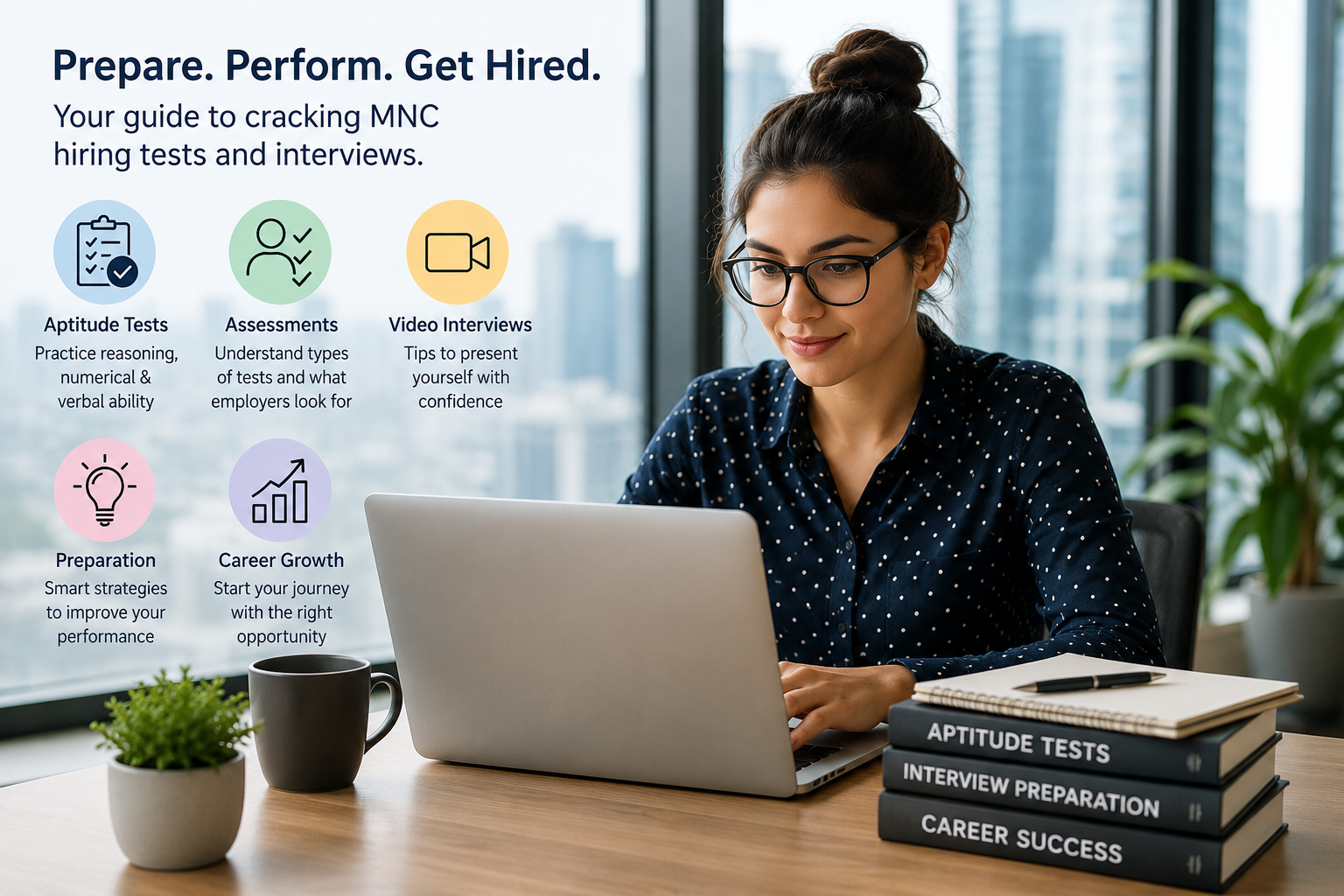
Getting shortlisted for a role at a multinational company is a big achievement, but for many students and recent graduates, it is only the first step. Today, large global employers rarely hire candidates based on a resume alone. Before meeting a hiring manager, applicants are often asked to complete online assessments, aptitude tests, video interviews, technical tasks, or workplace-based scenarios.
These tests are not added just to make the hiring process longer. They help employers understand whether a candidate has the practical skills, confidence, communication ability, and problem-solving mindset needed for a real workplace. For students preparing for graduate jobs, internships, or entry-level roles, understanding these hiring tests can make a major difference.
Many students spend time building a resume and applying for jobs, but they do not always prepare for what comes after the application. This is where many good candidates lose opportunities. A strong academic record may help a student get noticed, but performance in assessments can decide whether they move forward to the interview stage.
The Shift From Resumes to Real Skills
In the past, employers often focused heavily on degrees, academic scores, and interview performance. These things still matter, but multinational companies now want a clearer picture of how a candidate may perform in a real workplace.
A resume can show qualifications, achievements, and experience, but it cannot always show how a student thinks under pressure. It does not fully explain how someone communicates with a team, handles deadlines, solves unfamiliar problems, or responds when a situation changes suddenly.
This is why many global companies now use structured testing as part of their hiring process. These assessments give employers another way to understand a candidate beyond the resume. Instead of depending only on what is written in an application, companies can test actual skills and workplace behaviour.
For multinational companies, this is especially useful because they often receive applications from different countries, universities, and education systems. It can be difficult to compare candidates fairly when academic grading systems and university standards are different. Testing helps employers create a more consistent process.
It also helps recruiters manage large volumes of applications. Graduate programs and entry-level roles at multinational companies can attract thousands of applicants. Assessments help companies shortlist candidates faster while still focusing on skills and suitability.
What These Hiring Tests Usually Measure
Pre-employment assessments can measure different skills depending on the role and industry. Some tests focus on reasoning and problem-solving, while others look at communication, workplace behaviour, or technical knowledge.
Cognitive ability tests are very common in graduate and entry-level hiring. These tests usually measure numerical reasoning, verbal reasoning, logical thinking, and decision-making speed. They are often timed, which means students need to answer accurately while also managing pressure.
These tests are common in industries such as finance, consulting, technology, business services, and management roles. Employers use them because many workplace tasks require employees to understand information quickly, compare options, and make sensible decisions.
Personality and behavioural assessments are also used by many multinational companies. These tests help employers understand how a candidate may work within a team. They may look at communication style, confidence, flexibility, leadership potential, initiative, and how a person handles conflict or stress.
These assessments are not always about right or wrong answers. Instead, they are designed to understand workplace fit. For example, some roles may require someone who is highly detail-focused, while others may need someone who can manage people, adapt quickly, or communicate with clients.
Situational judgment tests are another important part of modern hiring. These tests present candidates with realistic workplace situations and ask them to choose the best response from several options. For students and fresh graduates, these tests are useful because they show how someone may behave professionally, even if they do not have years of work experience.
A situational judgment question may ask what a candidate would do if a team member missed a deadline, a client was unhappy, or a manager gave unclear instructions. The best answers usually show teamwork, communication, responsibility, and practical decision-making.
Technical and role-specific tests are common for IT, engineering, data, accounting, digital marketing, design, and business analysis roles. These tests may include coding challenges, case studies, written tasks, data interpretation exercises, or job-related problem-solving activities.
For example, a student applying for a data role may be asked to interpret numbers or clean a dataset. A student applying for a marketing role may be asked to review a campaign idea. An engineering candidate may be given a technical problem related to the role.
Video interviews are also becoming more common in the early stages of hiring. In many cases, students are asked to record answers to set questions within a time limit. This helps employers check communication skills, confidence, clarity, and professional presentation before inviting candidates to a live interview.
For students, video interviews can feel uncomfortable at first because there may be no person on the other side of the screen. However, they are now a normal part of many recruitment processes, especially for large companies hiring at scale.
Why These Tests Matter for Students and Graduates
For students and recent graduates, these tests can be one of the most important stages of the hiring process. Even a candidate with strong academic results may not move forward if they are not prepared for assessments.
This is important because many students focus mainly on resumes and interviews. They may not realise that the assessment stage often comes before the interview. In some cases, a candidate may never get the chance to speak with a recruiter if they do not pass the online testing stage.
Multinational companies usually receive applications from a large number of candidates. Since the competition is high, employers need a structured way to identify who is most suitable for the next round. Assessments help them check whether students have the skills required for the role.
For international students and graduates, these tests can also be an opportunity. A student may not come from a well-known university or may have limited local work experience, but strong performance in assessments can help demonstrate readiness.
These tests can show that a candidate has reasoning ability, communication skills, sound judgment, and the ability to handle workplace situations. This can be valuable for students who want to prove themselves beyond academic results.
However, preparation is important. Many capable students underperform simply because they are unfamiliar with the format. They may understand the subject but struggle with time limits, question style, or test pressure. This is why early preparation can make a big difference.
How Students Can Prepare Effectively
Students should treat assessment preparation as seriously as interview preparation. The first step is to understand the hiring process of the company they are applying to. Many large employers provide information about recruitment stages on their career pages, including whether candidates should expect online tests, video interviews, or assessment centres.
Practising sample aptitude and reasoning tests can help students become familiar with question formats and time limits. Regular practice improves speed, accuracy, and confidence. It also reduces stress because students know what to expect on the actual test day.
For numerical reasoning tests, students should practise reading graphs, tables, percentages, ratios, and basic calculations. For verbal reasoning tests, they should practise reading passages carefully and identifying the correct meaning. For logical reasoning tests, pattern recognition and structured thinking are important.
For situational judgment tests, students should focus on professional decision-making. The best answers usually consider the team, the customer, the company, and ethical behaviour. Students should avoid choosing responses that are too emotional, careless, or focused only on personal comfort.
Personality assessments should be answered honestly. Some students try to guess what the company wants to hear, but this can create inconsistent responses. Employers use these tests to understand genuine working style, so honest answers are usually better for long-term job fit.
Video interview preparation is also very important. Students should practise speaking clearly and keeping answers structured. A useful method is to explain the situation, what action was taken, and what result came from it. This helps students avoid vague answers.
Students can use examples from university projects, internships, part-time jobs, volunteer work, group assignments, or personal achievements. Even if they do not have full-time experience, they can still show responsibility, teamwork, leadership, and problem-solving ability through real examples.
It is also important to prepare the environment before a video interview. A quiet place, good lighting, stable internet, and professional appearance can improve the overall impression. Students should also test their camera and microphone before starting.
Another important step is aligning the resume with the skills being tested. If a company is looking for communication, problem-solving, leadership, or technical ability, the resume should clearly show examples of these strengths. The application, assessment, and interview should all support the same message.
How JobReady Placements Can Support Students
This is where JobReady Placements can make a real difference. Many students know how to apply for jobs, but they are not always prepared for the full hiring journey that comes after submitting an application.
JobReady Placements supports students by helping them understand what employers expect before interviews and placements begin. This includes resume preparation, interview readiness, employability skills, placement support, and practical career guidance.
For students aiming to work with multinational companies, preparation should not start after receiving an interview call. It should begin much earlier. Students need to understand how hiring stages work, what skills employers are testing, and how to present themselves confidently.
JobReady Placements helps students focus on practical readiness, not just job searching. This is important because modern recruitment is about more than sending applications. Students need to be ready for assessments, interviews, workplace expectations, and employer communication.
By building confidence early, students can approach the recruitment process with a stronger mindset. They can understand their strengths, improve weak areas, and prepare for the types of questions and tasks they may face during hiring.
The Bigger Picture
Pre-employment testing is now a major part of multinational company hiring. As global employers continue to receive large numbers of applications, assessments are likely to remain an important filter for graduate, internship, and entry-level roles.
For students, this change should not be seen only as a challenge. It is also an opportunity. A candidate may not have years of work experience or a famous university name on their resume, but strong preparation can help them stand out.
Students who understand the hiring process early are more likely to perform well. They know what to expect, how to prepare, and how to show their skills in a practical way. In a competitive job market, this readiness can make the difference between being rejected early and moving forward to the next stage.
Multinational companies are not only looking for candidates who look good on paper. They are looking for students who can think clearly, communicate well, solve problems, and adapt to professional environments.
For students and recent graduates, the message is clear: applying is only the beginning. Real preparation starts before the test, before the interview, and before the opportunity arrives. With the right guidance and practice, students can become more confident, more prepared, and more ready for the career opportunities they want to achieve.
Sources & References
SHL — Candidate assessment and practice test resources for aptitude, reasoning and workplace hiring tests.
https://www.shl.com/shldirect/en/practice-tests/
Indeed Career Guide — Common types of pre-employment tests including aptitude, personality and skills assessments.
https://www.indeed.com/career-advice/career-development/types-of-pre-employment-testing
Universities Australia — Career-ready graduates report covering work placements, employability and student readiness.
https://universitiesaustralia.edu.au/wp-content/uploads/2019/06/Career-Ready-Graduates-FINAL.pdf
Google Search Central — Guidance on creating helpful, reliable and people-first content for better search visibility.
https://developers.google.com/search/docs/fundamentals/creating-helpful-content
JobReady Placements — Student jobs, internships, career readiness and placement support platform.
https://jobreadyplacements.com.au/