Category: Employers, Interview
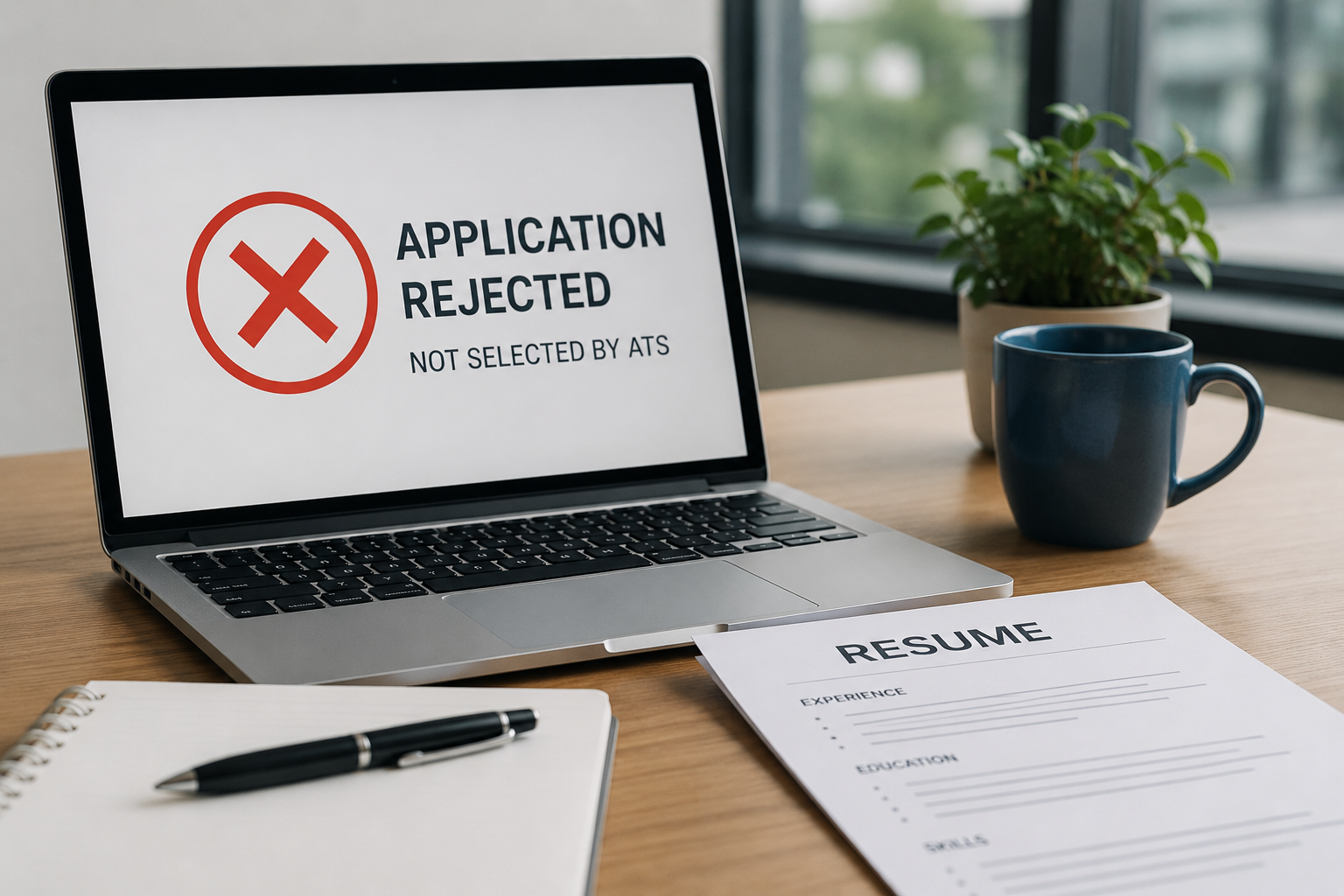
Why Thousands of Australian Job Applications Get Rejected Before Interviews
Author: Sakshi
Published Date: 16 May 2026
Published Time: 10:16 AM IST
You spent hours crafting your resume. You tailored the cover letter. You hit "Apply."
And then — silence.
If this sounds familiar, you're not alone. Thousands of job seekers across Australia submit applications every single day and never hear back — not because they're unqualified, but because their application was rejected before a single human being ever saw it.
In 2026, the Australian hiring process has fundamentally changed. Understanding why applications get rejected is the first step to making sure yours doesn't.
1. ATS Systems Filter Out Most Resumes Automatically
The single biggest reason Australian job applications get rejected has nothing to do with your experience or skills. It's an algorithm.
Most medium and large Australian employers now use Applicant Tracking Systems (ATS) — software that automatically scans, scores, and filters resumes before a recruiter opens a single file. Studies from TechRadar Pro suggest that approximately 75% of resumes never reach a human recruiter because automated systems screen them out first.
ATS systems reject resumes for reasons like:
- Missing keywords from the job description
- Unusual resume formats with tables, columns, or graphics
- Incorrect file types (some systems can't read PDF properly)
- Skills listed in a way the system doesn't recognise
- Lack of role-specific terminology
The fix: Mirror the exact language from the job description in your resume. If the ad says "stakeholder management," use that phrase — not "managing relationships." Use a clean, single-column format with clear headings.
2. The Resume Doesn't Match the Role Closely Enough
Australian hiring managers and ATS systems both look for relevance. A generic resume that lists everything you've ever done is far less effective than one tailored specifically to the role you're applying for.
Common mistakes include:
- Submitting the same resume to every job without customisation
- Including experience irrelevant to the target role
- Burying key achievements under long blocks of text
- Using vague language like "responsible for" instead of specific outcomes
The fix: For every application, spend 10 minutes adjusting your professional summary and key skills section to reflect the specific role. Quantify your achievements wherever possible — "increased customer satisfaction by 22%" says far more than “improved customer service.”
3. No Cover Letter — or a Generic One
Many Australian candidates either skip the cover letter entirely or copy-paste the same template for every application. Both approaches dramatically reduce your chances.
A well-written cover letter shows an employer three things: that you understand their business, that you're genuinely interested in this specific role, and that you can communicate professionally in writing.
In a market where hundreds of people apply for the same position, a personalised cover letter is one of the fastest ways to stand out — because most candidates don't bother writing one.
The fix: Address the hiring manager by name if possible. In three short paragraphs, explain why you want this role at this company, and name your two most relevant achievements. Keep it under one page.
4. Unclear or Missing Work Rights Information
Australian employers are legally required to confirm that candidates have the right to work in Australia. If your resume or application doesn't make your visa status or citizenship clear, many employers will simply move on rather than follow up.
This is a particularly common reason for rejection among international students and migrants — not because employers are unwilling to hire visa holders, but because ambiguity creates extra steps in the hiring process.
The fix: Include a clear line on your resume stating your work rights. For example: "Australian Permanent Resident — full work rights" or "Student visa holder — authorised to work 48 hours per fortnight." Simple, clear, and removes friction for the employer.
5. Applying for Roles You're Significantly Under- or Over-Qualified For
Both extremes create problems. Applying for roles well above your experience level means ATS systems and recruiters will screen you out quickly. But applying for roles significantly below your experience level can also trigger concern — employers worry you'll leave as soon as something better comes along.
The fix: Focus your applications on roles where you meet 70–80% of the stated requirements. Don't wait until you tick every box — most employers expect to train for the remaining 20%. But be realistic about the gap between where you are and what the role demands.
6. Poorly Optimised LinkedIn Profile
In 2026, your LinkedIn profile is effectively a second resume — and Australian recruiters search it constantly. If your profile is incomplete, outdated, or has no activity, it sends a signal that you're either not serious about your career or not engaged in your industry.
Many applications are quietly rejected after a recruiter reviews a candidate's LinkedIn and finds it doesn't match the resume, lacks detail, or shows no professional engagement.
The fix: Make sure your LinkedIn headline clearly states your role and key skills. Upload a professional photo. List all relevant experience with short descriptions and achievements. Ask former colleagues or supervisors for written recommendations.
7. Lack of Australian Work Experience
This is one of the most frustrating barriers for international graduates and career changers. Even highly qualified candidates are regularly overlooked because they have no demonstrable experience in the Australian workplace context.
Australian employers aren't just hiring skills — they're hiring someone who understands local workplace culture, communication norms, and professional expectations. Without local experience, even strong candidates can appear risky to hire.
The fix: Internships, work placements, and volunteer roles with Australian organisations are the most effective ways to build local experience quickly. Platforms like JobReady Placements list verified internships and entry-level roles specifically designed to help graduates and international students gain Australian workplace exposure.
8. Applying Too Late
Most competitive roles receive the majority of serious applications within the first 48 to 72 hours of being posted. After that, many hiring managers are already reviewing shortlists — and late applications are frequently dismissed regardless of quality.
The fix: Set up job alerts on JobReady Placements and other platforms so you're notified immediately when relevant roles are posted. Apply the same day if possible.
How JobReady Placements Helps You Get Past the Rejection Stage
JobReady Placements was built specifically to help Australian job seekers — including international students, fresh graduates, and career starters — overcome the barriers that cause most applications to fail.
The platform offers:
- Verified employer listings across every major Australian industry, so you're not wasting time applying to ghost jobs or fake ads
- Salary transparency on most listings, so you can calibrate your applications appropriately
- Resume upload and employer discovery — upload once and let verified Australian employers find you directly
- Career insights and job-readiness guides to help you understand what Australian employers are actually looking for in 2026
- Internship and work placement listings for graduates and international students building local experience for the first time
If your applications have been disappearing into silence, the problem is rarely your qualifications. It's almost always something fixable — and fixing it starts with understanding exactly where in the process your application is being lost.
Browse verified Australian job listings today at jobreadyplacements.com.au
Conclusion
The Australian job market in 2026 is competitive, fast-moving, and heavily filtered by technology before a human ever gets involved. Thousands of qualified candidates are rejected every day — not because they're wrong for the role, but because their application never made it past the first screening.
The good news: every reason listed above is fixable. A tailored resume, clear work rights information, a personalised cover letter, and an optimised LinkedIn profile can move you from the rejection pile to the interview shortlist faster than you might expect.
Start with the right platform, apply to the right roles, and give your application the best possible chance of reaching the person who can actually offer you the job.
Claude responded: References & Research Sources
References & Research Sources
TechRadar Pro – 75% of Resumes Never Reach a Human Recruiter
https://www.techradar.com/pro/75-of-resumes-never-reach-a-human-heres-the-hidden-reason-your-application-is-getting-rejected-by-ai
SEEK Australia – Job Ad Volume & Application Trends 2025–2026
https://www.seek.com.au/career-advice
Australian Bureau of Statistics – Education and Work Australia 2025
https://www.abs.gov.au/statistics/people/education/education-and-work-australia/latest-release
Jobs and Skills Australia – Labour Market Insights & Skills Shortages
https://www.jobsandskills.gov.au/data/labour-market-insights
QILT Graduate Outcomes Survey – Graduate Employment Rates Australia
https://www.qilt.edu.au/surveys/graduate-outcomes-survey-(gos)
JobReady Placements – Australian Jobs & Internships Platform
https://jobreadyplacements.com.au