Category: Jobseekers, Employers, Interview
How to Prepare for Campus Placements: Complete Guide for Students
Campus placements are one of the most important milestones in a student's career journey. For most students, this is the first real opportunity to enter the professional world and secure a job before graduation. But getting selected in campus placements is not just about having a degree or good marks. Recruiters also look for confidence, communication skills, technical knowledge, problem-solving ability and overall job readiness.
Many students start preparing only when placement season begins, but the best results usually come when preparation starts early. A strong resume, solid interview practice, aptitude preparation and professional behaviour can make a real difference to placement success. This guide breaks down exactly how students can prepare step by step and improve their chances of getting selected.
What Are Campus Placements?
Campus placements are recruitment drives conducted by companies in colleges and universities to hire students for entry-level jobs, internships or trainee roles. Companies either visit campuses directly or run online hiring rounds to select suitable candidates. The process usually includes:
- Resume shortlisting
- Aptitude test
- Group discussion
- Technical interview
- HR interview
Each round tests a different skill, so students need well-rounded preparation rather than focusing on just one area.
Why Preparation Matters
Competition during placement season is high, and recruiters often have limited time to shortlist candidates from a large applicant pool. Students who prepare in advance can present themselves better and perform with more confidence across every round. Good preparation strengthens a student's resume, communication and interview answers, while also reducing nervousness and helping them understand what employers actually expect from freshers.
Understand the Placement Process First
Before diving into preparation, it helps to understand how the selection process works end to end. Knowing what each stage involves makes it easier to prepare for it specifically. Aptitude tests require regular practice, while interviews demand strong communication and confidence. Understanding the full process in advance also helps students avoid last-minute confusion once the placement drive actually begins.
Build a Strong, Relevant Resume
A resume is the first impression a student creates before ever meeting a recruiter. A strong campus placement resume should be clear, simple and focused on relevant details such as:
- Education and academic performance
- Skills relevant to the target role
- Projects with measurable outcomes
- Internships and certifications
- Achievements and college activities
Students should avoid adding unnecessary information and instead highlight what makes them suitable for the specific role. Projects, practical learning, technical tools and college activities are especially useful for freshers who don't yet have full-time work experience. The resume should be easy to read and tailored to match the job role as closely as possible.
Improve Communication Skills
Strong communication is critical throughout the placement process, whether it's introducing yourself, answering interview questions, participating in a group discussion or explaining a project clearly. Good communication doesn't mean using complex vocabulary — it means speaking clearly, listening carefully and sharing ideas with confidence.
Students can build this through:
- Regular self-introduction practice
- Reading consistently to improve vocabulary and fluency
- Speaking in front of friends or family
- Attending mock interviews
Recruiters pay close attention to how a candidate speaks and responds under pressure, and strong communication often creates a lasting positive impression.
Prepare for Aptitude Tests
Most companies include an aptitude round to check logical reasoning, numerical ability, verbal skills and problem-solving. Regular practice is the key to improving both speed and accuracy here.
Important topics to cover include:
- Percentages, profit and loss
- Time and work, time-speed-distance
- Ratios and averages
- Number series and logical reasoning
- Puzzles and reading comprehension
Taking timed mock tests regularly helps students get familiar with question patterns, manage time better during the real test, and identify their weaker areas early.
Strengthen Technical Skills
The technical skills required vary depending on a student's field and target role:
- Engineering students may need programming, database or networking knowledge
- Management students may need marketing, finance or Excel skills
- Commerce students may need accounting or financial data handling skills
Students should identify what's required for their target roles early and start building those skills well before placement season, using online courses, certifications, practical projects and internships. Recruiters consistently prefer candidates who can demonstrate practical understanding, not just theoretical knowledge.
Practise Common Interview Questions
Interview preparation is one of the most important parts of the process. Students should rehearse common HR and technical questions such as:
- Tell me about yourself
- Why should we hire you
- What are your strengths and weaknesses
- Why do you want this job
- Tell us about your project or internship
The goal isn't to memorise answers word for word, but to be able to speak about these topics naturally and confidently when asked.
Prepare for Group Discussions
Group discussions test communication, confidence, teamwork and listening skills. Students should aim to:
- Speak clearly and stay relevant to the topic
- Respect other participants' opinions
- Avoid interrupting or speaking without a clear point
- Support arguments with logic or examples
A good group discussion performance comes from balanced participation, logical thinking and polite communication — and staying current with business news and general topics makes this much easier.
Research the Company and Build Confidence Through Mock Interviews
Before any placement interview, students should research the company's services, industry, work culture and recent updates. This kind of preparation makes it easier to answer questions well and shows recruiters that the candidate is genuinely interested.
Mock interviews are equally valuable, helping students:
- Practise real interview situations
- Improve body language and answer structure
- Reduce nervousness ahead of the actual round
Asking for feedback after each mock session helps target specific weak areas before it counts.
Focus on Professional Behaviour
Small details matter throughout the placement process. Recruiters often notice:
- Punctuality and politeness
- Appropriate dressing
- Eye contact and body language
- A positive, confident attitude
These behavioural cues are often noticed just as much as technical answers.
Avoid Common Mistakes
Many students lose opportunities through avoidable mistakes, such as:
- Starting preparation only a day before the interview
- Reusing the same resume for every company
- Skipping company research
- Struggling to explain their own projects clearly
- Giving inaccurate information in a resume or interview
The better approach is to stay honest, prepared and professional throughout.
How Early Should Preparation Start?
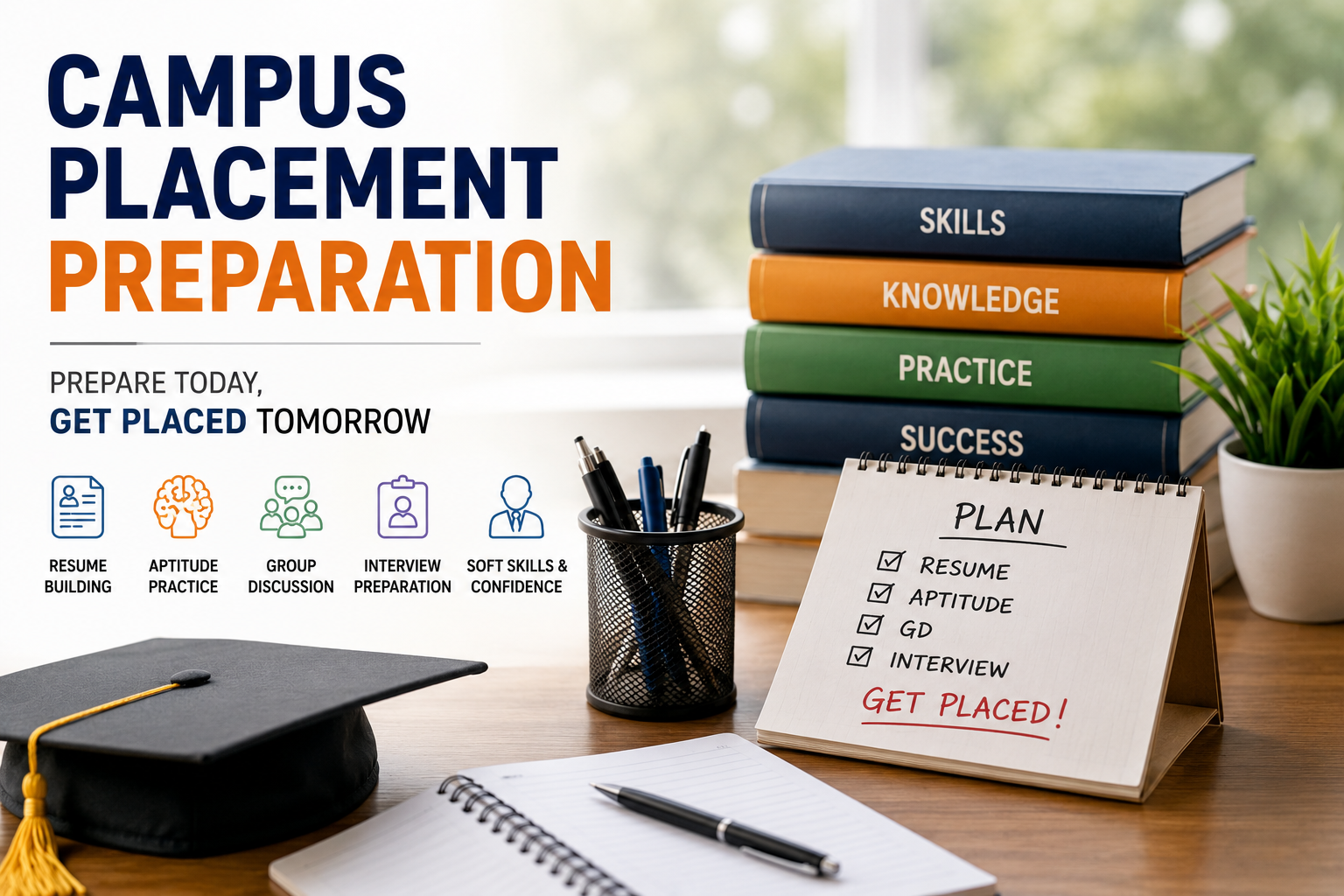
Ideally, students should begin preparing six to twelve months before placement season, giving enough time to improve their resume, build relevant skills, and practise interviews and certifications. That said, even students starting late can improve significantly by prioritising the most important areas first: resume, aptitude practice, interview preparation and communication skills. Consistency matters far more than last-minute intensity.
Final Thoughts
Campus placements can give a student's career a strong start, but success depends entirely on preparation. It takes more than academic knowledge — a strong resume, solid communication, aptitude practice, technical skills, interview confidence and professional behaviour all play a part. Students who start early, prepare step by step and stay consistent give themselves the best chance of getting selected and beginning their career on a strong footing.
Sources & References
Indeed Career Guide — How to Prepare for Campus Placement
Use for: campus placement process, resume preparation, aptitude tests and interview tips.
Coursera — Interview Preparation Guide
Use for: interview preparation, confidence building and common interview questions.
National Careers Service — Interview Advice
Use for: interview confidence, preparation and professional behaviour.
Youth Central Victoria — Job Interview Tips
Use for: body language, interview behaviour and workplace readiness.
University of Sydney — Employability Skills
Use for: communication skills, teamwork, planning and problem-solving.
U.S. Department of Labor — Soft Skills: The Competitive Edge
Use for: soft skills, professionalism, communication and teamwork.
National Careers Service — Identifying Skills and Upskilling
Use for: skill development, career readiness and employability skills.
#JobReadyPlacements #CampusPlacements #PlacementPreparation #StudentCareers #CampusRecruitment #InterviewPreparation #ResumeTips #AptitudeTest #GroupDiscussion #TechnicalInterview #HRInterview #CommunicationSkills #FreshersJobs #JobReadySkills #CareerReadiness #StudentSuccess #EmployabilitySkills #PlacementGuide