Category: Jobseekers, Employers, Interview
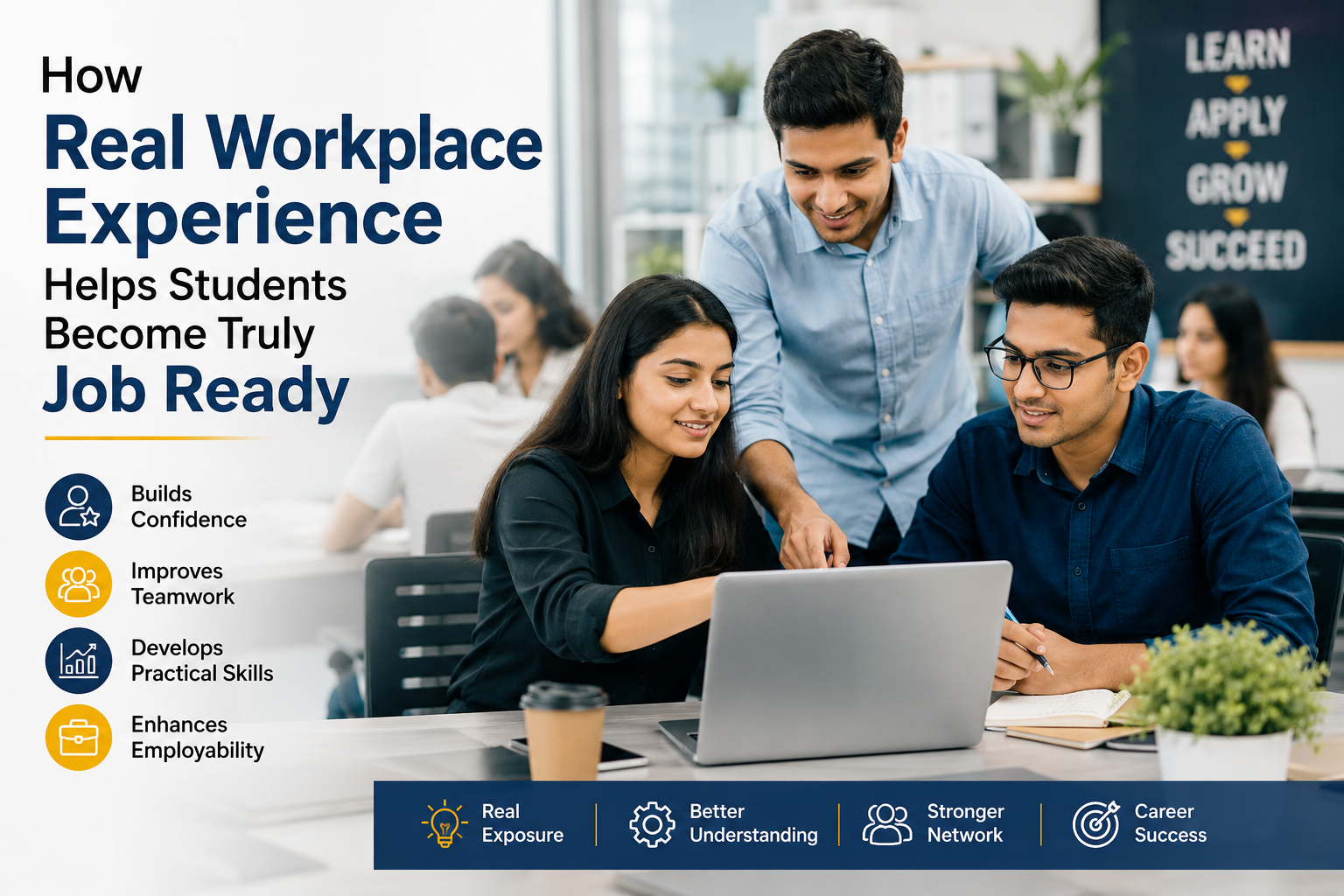
How Real Workplace Experience Helps Students Become Truly Job Ready
Author: Sakshi | Published Date: 29 May 2026 | Published Time 10:15 AM IST
Starting a career is an important step for every student. After completing studies, many students feel excited about entering the workforce — but at the same time, they may feel nervous. They may understand their course and theory well, but working in a real professional environment can feel completely different.
This is where real workplace experience becomes important. It helps students understand how actual workplaces operate, how employers think, how teams communicate, and what skills are needed to perform well in a job.
Classroom learning gives students knowledge, but workplace experience gives them confidence, practical exposure, and professional understanding. For students who want to become truly job ready, real workplace experience can make a big difference.
What Is Real Workplace Experience?
Real workplace experience means spending time in an actual professional environment — through internships, work placements, traineeships, or part-time jobs. It is different from classroom learning because students face real tasks, real deadlines, and real professional expectations.
This experience teaches students what no textbook can fully explain: how a workplace actually functions day to day.
It Bridges the Gap Between Study and Employment
One of the biggest challenges students face is the gap between education and employment. In a classroom, students learn through lessons, assignments, and exams. But in a workplace, they need to manage real tasks, follow instructions, work with other people, and complete responsibilities on time.
Real workplace experience helps make this transition easier. Students begin to understand what happens in a real job and how their learning can be applied in practical situations. Instead of entering the workforce with confusion, they become more aware of what to expect.
It Builds Confidence Before the First Job
Many students feel nervous before starting their first job. They may worry about making mistakes, speaking with managers, handling deadlines, or working with new people. This lack of confidence is completely normal.
Workplace experience helps reduce this fear. When students spend time in a real workplace, they slowly become more comfortable. They learn how to introduce themselves, ask questions, follow instructions, and complete tasks.
This confidence also helps during job interviews. A student with workplace experience can talk about real examples instead of only discussing classroom learning.
What Students Learn Through Real Workplace Experience
Real workplace experience teaches many things that are difficult to learn only from books or lectures. Some of the most important things students learn include:
- How to communicate with managers, supervisors, and team members
- How to manage time and complete tasks responsibly
- How to follow workplace instructions and procedures
- How to work with different personalities in a team
- How to accept feedback and improve performance
- How to stay professional under pressure
- How to understand real employer expectations
These skills help students become more confident, mature, and ready for employment.
It Improves Communication and Teamwork Skills
Communication is one of the most important skills in any workplace. Through workplace experience, students learn how communication works in real situations — how to talk to supervisors, colleagues, and clients in a professional way, and how to listen, understand instructions, and respond respectfully.
Teamwork is equally important. Most jobs require people to work with others. Students learn how to cooperate, support team members, respect different opinions, and contribute to shared goals.
It Helps Students Understand Employer Expectations
Employers look for more than qualifications. A degree or certificate is important, but employers also want candidates who are punctual, responsible, confident, and willing to learn.
Real workplace exposure helps students understand what employers actually expect. They learn that being job ready means more than having technical knowledge — it means arriving on time, following instructions, completing tasks without constant reminders, and showing a positive attitude. When students understand these expectations early, they become far better prepared for future roles.
It Makes Students More Employable
Practical workplace experience makes a student's resume stronger. Employers feel more confident hiring someone who has already spent time in a real work environment.
Without workplace experience, students can only talk about what they studied. With practical exposure, they can speak about real tasks, real challenges, and real growth.
For example, instead of saying: "I have good communication skills."
A student can say: "During my workplace experience, I worked with a team, followed supervisor instructions, gave regular updates, and learned how to communicate professionally in a real work environment."
This type of answer is far more convincing in interviews.
Key Job Ready Skills Developed Through Workplace Experience
Real workplace experience helps students develop practical career skills that employers value. These include:
- Communication — speaking clearly, listening properly, and sharing updates
- Teamwork — working with others and contributing to group goals
- Time management — completing tasks on time and managing priorities
- Problem-solving — handling small challenges in practical situations
- Adaptability — adjusting to new tasks, people, and environments
- Professionalism — behaving responsibly and respectfully at work
- Confidence — feeling prepared for interviews and employment
It Helps Students Choose the Right Career Path
Many students are unsure about their future career direction. Real workplace experience gives them a chance to explore an industry before making long-term decisions. They can see daily responsibilities, workplace culture, challenges, and opportunities connected to a particular field.
Sometimes students discover they truly enjoy the industry. Other times they realise a different path suits them better. Both outcomes are valuable because they help students make better, more informed decisions about their future.
It Develops Professional Behaviour
In a real workplace, small habits matter. Arriving on time, dressing appropriately, speaking respectfully, staying organised, and accepting feedback can all affect how others see you.
Workplace experience teaches students how to act responsibly in a professional environment. It builds habits that create a strong professional image — and employers notice these qualities when hiring.
It Supports Long-Term Career Growth
Real workplace experience does not only help students get their first job — it supports long-term career growth. The skills students learn early, such as communication, teamwork, responsibility, and professionalism, stay with them throughout their professional journey.
Students who gain practical experience early often learn faster, accept feedback better, and improve their performance more quickly over time.
Final Thoughts
Real workplace experience plays an important role in helping students become truly job ready. It gives them practical exposure, builds confidence, improves communication, and helps them understand what employers really expect.
For students, workplace experience is not just an extra activity — it is a valuable part of career preparation. Students who gain real workplace experience are better prepared for interviews, employment, and long-term career growth. That is why practical exposure should be seen as a key step in becoming truly job ready.
References
Department of Education – During Your Studies in Australia
https://www.education.gov.au/international-education/during-your-studies-australia
Jobs and Skills Australia – Employers’ Experiences of Young Job Applicants
https://www.jobsandskills.gov.au/data/recruitment-experiences-and-outlook-survey/research-articles/employers-experiences-young-job-applicants
Jobs and Skills Australia – Employers’ Experiences of Young Job Applicants PDF
https://www.jobsandskills.gov.au/sites/default/files/2025-03/employers_experiences_of_young_job_applicants.pdf
Your Career – Australian Government Career Information
https://www.yourcareer.gov.au/
Universities Australia – Real-World Work Experience for Students
https://universitiesaustralia.edu.au/media-item/half-a-million-uni-students-get-a-career-edge-with-real-world-work-experience/