Category: Jobseekers, Employers, Interview
Job-Ready Skills: How Jobseekers Get Hired and Employers Find Better Talent
For jobseekers, getting hired is no longer just about sending more applications. It is about showing employers that you are prepared, reliable and ready for real workplace responsibilities. This is where job-ready skills make a strong difference.
Job-ready skills help candidates become more employable and help employers find people who are better prepared for the role. When jobseekers have the right mix of practical skills, professional behaviour and confidence, the hiring process becomes easier and more effective for both sides.
What Are Job-Ready Skills?
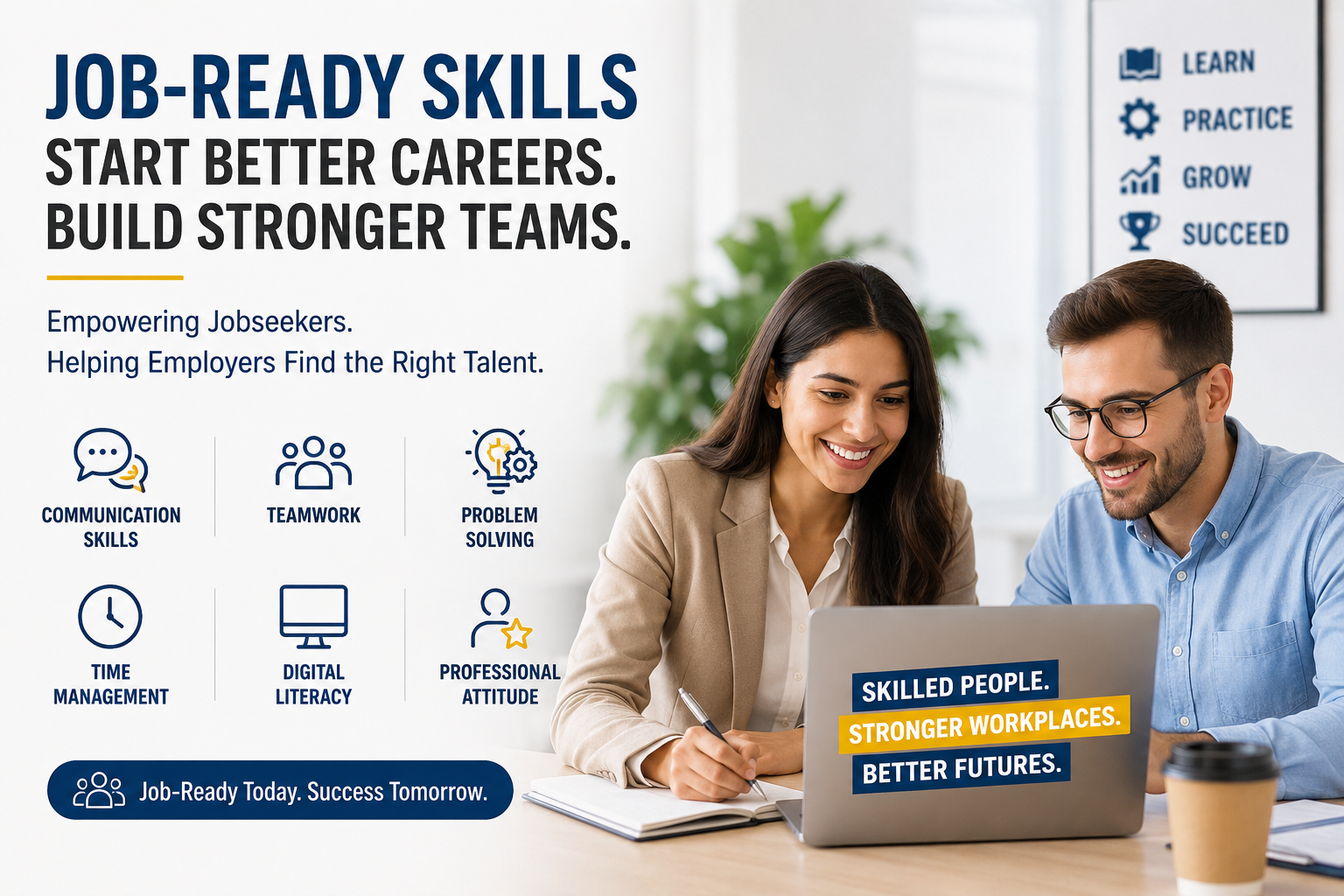
Job-ready skills are the practical, professional and personal abilities that help a person succeed in the workplace. These skills go beyond formal education and help candidates perform better during interviews, onboarding and daily work.
Some of the most important job-ready skills include:
- Communication and teamwork
- Problem-solving and critical thinking
- Time management and reliability
- Digital literacy and workplace technology skills
- Resume writing and interview preparation
- Professional behaviour and customer service
- Adaptability and willingness to learn
- Industry-specific practical knowledge
These skills help jobseekers move from study, training or unemployment into the workplace with more confidence and clarity. They also help employers identify candidates who are not only qualified, but also prepared for real workplace expectations.
Why Job-Ready Skills Matter for Jobseekers
Competition for jobs is strong. Many candidates may apply for the same role, but the ones who stand out are usually those who show confidence, preparation and workplace readiness.
A jobseeker with job-ready skills can make a stronger impression during interviews. They are more likely to explain their strengths clearly, speak professionally and show that they understand the role.
Job-ready skills can help jobseekers:
- Present themselves better in interviews
- Write resumes that match employer expectations
- Understand workplace culture before starting a new role
- Communicate their strengths more clearly
- Build confidence during the job search process
- Improve their chances of getting hired
Most importantly, these skills help jobseekers feel more prepared. When candidates understand workplace culture, interview expectations and basic professional behaviour, they are more likely to take positive steps toward employment.
Why Employers Need Job-Ready Candidates
Hiring the right person is important for every business. A poor hiring decision can affect productivity, team performance and customer service. This is why employers prefer candidates who can settle into the workplace quickly and contribute without needing constant support.
Job-ready candidates understand basic workplace expectations. They know the importance of being punctual, communicating clearly, following instructions and working respectfully with others. These qualities make onboarding easier and help businesses save time.
For employers, job-ready candidates can support:
- Faster onboarding
- Better workplace productivity
- Stronger team performance
- Reduced pressure on managers and trainers
- Improved customer service
- Better staff retention
- Lower recruitment risk
Employers do not just need applicants. They need people who are ready to work, willing to learn and capable of growing within the business.
Skills-Based Hiring Is Becoming More Important
Many employers are now focusing more on skills-based hiring. This means they are looking at what a candidate can actually do, not only their degree, certificate or previous job title.
This shift is important for jobseekers because it creates more opportunities. A candidate may not have years of experience, but if they can show practical skills, a positive attitude and willingness to learn, they can still become a strong choice for employers.
For businesses, skills-based hiring helps identify candidates who are better matched to the role. Instead of hiring only based on qualifications, employers can focus on real ability, workplace behaviour and long-term potential.
This approach benefits both sides. Jobseekers get a fairer chance to prove their value, and employers can find candidates who are more suitable for the actual work required.
Key Job-Ready Skills Employers Look For
Employers look for a mix of soft skills, practical ability and professional behaviour. These skills are useful across many industries and help candidates perform better in real workplace situations.
1. Communication Skills
Clear communication is one of the most important workplace skills. Employers value candidates who can listen carefully, ask questions, follow instructions and speak professionally with team members, managers and customers.
2. Reliability
Businesses need employees they can trust. Being on time, meeting deadlines and taking responsibility for work shows that a candidate is dependable and serious about the role.
3. Teamwork
Most jobs require working with other people. Good teamwork helps create a positive workplace and improves overall performance.
4. Problem-Solving
Every workplace has challenges. Employers appreciate candidates who can stay calm, think clearly and look for practical solutions.
5. Digital Confidence
Basic digital skills are now expected in many roles. Using email, online forms, workplace systems and digital communication tools can make a candidate more employable.
6. Professional Attitude
A positive attitude can make a major difference. Employers value candidates who are respectful, motivated, open to feedback and willing to improve.
Who Can Benefit from Job-Ready Training?
Job-ready training is helpful for many people, especially those who are preparing to enter or return to the workforce. It helps candidates understand what employers are looking for and how to present themselves professionally.
Job-ready training is useful for:
- Students looking for their first job
- Career changers moving into a new industry
- Migrants and international graduates
- People returning to work after a break
- Jobseekers who lack interview confidence
- Entry-level candidates
- Candidates who want to improve their resume and communication skills
This type of training is not only about learning new skills. It is also about building confidence, improving communication and understanding how to behave professionally in different workplace situations.
How JobReady Placements Supports Jobseekers
JobReady Placements helps jobseekers become more confident, employable and workplace-ready. The focus is on practical support that prepares candidates for real job opportunities.
Support may include:
- Resume guidance
- Interview preparation
- Career planning
- Workplace readiness support
- Skills development
- Employer expectation guidance
- Job search preparation
For many candidates, the biggest challenge is not a lack of ability. It is not knowing how to show their skills in the right way. JobReady Placements helps bridge that gap by preparing jobseekers for the expectations of today’s employers.
How JobReady Placements Supports Employers
Employers need candidates who are prepared, reliable and ready to work. JobReady Placements helps connect businesses with candidates who better understand workplace expectations and are more prepared for interviews, onboarding and job responsibilities.
For employers, this means:
- Access to more prepared candidates
- Reduced hiring pressure
- Better candidate matching
- Faster onboarding
- Stronger workforce outcomes
When candidates arrive with stronger job-ready skills, businesses can focus more on role-specific training and long-term development. This creates better hiring outcomes and stronger teams.
Why Job-Ready Skills Create Better Outcomes
Job-ready skills create value for both jobseekers and employers. Jobseekers gain confidence, improve their interview performance and become more employable. Employers gain access to candidates who are better prepared, easier to onboard and more likely to contribute positively.
When both sides focus on workplace readiness, the gap between applying for a job and succeeding in a job becomes smaller. Candidates feel more prepared, and employers can make hiring decisions with more confidence.
In simple terms, job-ready skills help create:
- Better prepared jobseekers
- More confident candidates
- Stronger interview performance
- Easier hiring decisions
- Better workplace productivity
- Long-term employment success
This is why job-ready skills are becoming an important part of successful employment pathways.
Final Thoughts
Job-ready skills are essential in today’s competitive job market. For jobseekers, they improve confidence, employability and career opportunities. For employers, they support better hiring decisions, faster onboarding and stronger workplace performance.
Success in the workplace is not built only on qualifications. It also depends on communication, reliability, adaptability, practical skills and a professional attitude.
By focusing on job-ready skills, JobReady Placements helps jobseekers prepare for real employment opportunities and helps employers find better talent for their workforce.
References & Research Sources
- Jobs and Skills Australia — Latest Labour Market & Skills Updates
Australia ke job ads, skill shortages aur workforce trends ke liye official source.
https://www.jobsandskills.gov.au/ - ABS — Labour Force, Australia, April 2026
Latest Australian employment, unemployment aur labour force data ke liye official source.
https://www.abs.gov.au/statistics/labour/employment-and-unemployment/labour-force-australia/latest-release - Indeed Hiring Lab — 2026 AU Jobs & Hiring Trends Report
Australia ke current hiring trends, employer demand aur job market changes ke liye useful source.
https://www.hiringlab.org/au/blog/2026/01/30/indeed-2026-au-jobs-hiring-trends-report/ - World Economic Forum — Future of Jobs Report 2025
Future skills, automation, technology impact aur skills-based hiring trends ke liye strong global source.
https://www.weforum.org/publications/the-future-of-jobs-report-2025/ - Your Career — Get Job Ready
Australian Government ka job-ready guidance source for resume, career planning, job search and employability preparation.
https://www.yourcareer.gov.au/get-job-ready